Caryota cumingii
Pas d'illustration
pour le moment 😕

Un palmier solitaire. Il pousse de 5 à 8 m de hauteur et 20 cm de diamètre. Ils peuvent mesurer 12 m de haut. Il a un tronc épais et profondément annelé. Ils ont des feui ... (traduction automatique)
→suite


Affich., herbiers & co.
Caryota cumingii

Un palmier solitaire. Il pousse de 5 à 8 m de hauteur et 20 cm de diamètre. Ils peuvent mesurer 12 m de haut. Il a un tronc épais et profondément annelé. Ils ont des feuilles alternes étalées. Les f... (traduction automatique) →suite
Pas d'illustration
pour le moment 😕
Pas d'illustration
pour le moment 😕
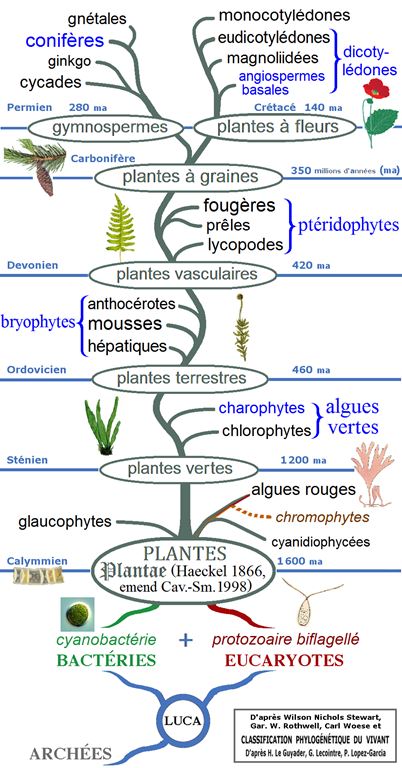
Classification
- Classique : en haut de l'écran, sous le coeur.
- Phylogénétique :
- Clade 4 : Angiospermes ;
- Clade 3 : Monocotylédones ;
- Clade 2 : Commelinidées ;
- Ordre APN : Arecales ;
- Famille APN : Arecaceae ;
À droite, cet arbre phylogénétique des plantes montre les principaux clades et groupes traditionnels (monophylétiques en noir et paraphylétiques en bleu).
Dénominations
- Nom botanique : Caryota cumingii Lodd. ex Mart.
- Noms anglais et locaux : Philippines fishtail palm
Description et culture
Tableau récapitulatif
Parties comes-tibles Note comest. (1-5) Note medic. (1-5) (Zones de) Rusticité Besoins en 
Besoins en  (1-3)
(1-3)Périodes de semis et récoltes Graines au gramme Durée de viabilité Profon-deur semis Espace-ment plants Espace-ment lignes Durée germi-native Durée avant récolte J F M A M J
J A S O N D
J F M A M J
J A S O N D
- dont infos de 0FPI ("FOOD PLANTS INTERNATIONAL", en anglais) :
Description :
Un palmier solitaire. Il pousse de 5 à 8 m de hauteur et 20 cm de diamètre. Ils peuvent mesurer 12 m de haut. Il a un tronc épais et profondément annelé. Ils ont des feuilles alternes étalées. Les feuilles mesurent 3,3 m de long et 2 m de large. Ils poussent en 2 ou 3 niveaux étroitement fixés au sommet de la plante. Les extrémités des feuilles se courbent et pendent. La bractée (spathe) sous les fleurs est très grande. Le fruit est rond et de petite taille avec une seule graine. Le revêtement extérieur pulpeux contient de très nombreuses aiguilles avares comme des cristaux. La graine a une surface polie brune. Les branches de la tige florale portent de très petites écailles fortement poilues{{{0(+x) (traduction automatique).
Original : A solitary palm. It grows 5 to 8 m in height and 20 cm across. They can be 12 m high. It has a thick, deeply ringed trunk. They have spreading alternate leaves. The leaves are 3.3 m long and 2 m wide. They grow in 2 or 3 closely set tiers at the top of the plant. The tips of the leaves curve over and hang down. The bract (spathe) below the flowers is very large. The fruit is round and small in size with a single seed. The pulpy outer covering contains very many stingy needle like crystals. The seed has a brown polished surface. The branches of the flower stalk bear strongly hairy very small scales{{{0(+x).
Culture :
Les plantes sont cultivées à partir de graines. La germination peut être irrégulière. Les graines peuvent mettre 10 à 12 mois pour germer. Il peut également être cultivé par drageons{{{0(+x) (traduction automatique).
Original : Plants are grown from seed. Germination can be irregular. Seeds may take 10-12 months to germinate. It can also be grown by suckers{{{0(+x).
 Consommation (rapports de comestibilité, parties utilisables et usages alimentaires correspondants)
Consommation (rapports de comestibilité, parties utilisables et usages alimentaires correspondants)Parties comestibles :
chou, graines, amidon, coeur de palmier, sève{{{0(+x) (traduction automatique). Original : Cabbage, Seeds, Starch, Palm heart, Sap{{{0(+x).Détails :
Le bourgeon est cuit et mangé comme légume. La sève de la fleur est collectée pour le tuba ou le vin de palme. L'amidon de sagou est fabriqué à partir de la moelle des tiges{{{0(+x) (traduction automatique).
Original : The bud is cooked and eaten as a vegetable. The sap of the flower is collected for tuba or palm wine.Sago starch is made from the pith of the stems{{{0(+x).
Partie testée :
graine{{{0(+x) (traduction automatique). Original : Seed{{{0(+x) Risques et précautions à prendre
Risques et précautions à prendrenéant, inconnus ou indéterminés.
Autres infos
dont infos de 0FPI ("FOOD PLANTS INTERNATIONAL", en anglais) :
Distribution :
C'est une plante tropicale. Il convient aux basses terres chaudes et humides. Largement distribué dans les îles des Philippines. Il convient aux zones de rusticité 11-12. Jardins botaniques d'Adélaïde. Dans la maison chaude des jardins botaniques d'Adélaïde{{{0(+x) (traduction automatique).
Original : It is a tropical plant. It suits the hot humid lowlands. Widely distributed in the islands of the Philippines. It suits hardiness zones 11-12. Adelaide Botanical Gardens. In Adelaide Botanical Gardens hot house{{{0(+x).
Localisation :
Asie, Australie, Indonésie, Malaisie, Pacifique, Philippines, Asie du Sud-Est{{{0(+x) (traduction automatique).
Original : Asia, Australia, Indonesia, Malaysia, Pacific, Philippines, SE Asia{{{0(+x).
Notes :
Il existe 12 espèces de Caryota. Ils sont tropicaux{{{0(+x) (traduction automatique).
Original : There are 12 Caryota species. They are tropical{{{0(+x).
Liens, sources et/ou références
Liens :
/ ;Sources et/ou références :
bibliographie (liste des sources et/ou références de l'encyclopédie)
dont classification : IPNI ("International Plant Names Index", en anglais) ; Kew (POWO - "Plant Of the World Online", "Royal Botanical Garden", en anglais) ;
dont livres et bases de données : 0FPI ("FOOD PLANTS INTERNATIONAL", en anglais) ;
dont bibliographie/références de 0FPI ("FOOD PLANTS INTERNATIONAL", en anglais) :
Cundall, P., (ed.), 2004, Gardening Australia: flora: the gardener's bible. ABC Books. p 336 ; Etherington, K., & Imwold, D., (Eds), 2001, Botanica's Trees & Shrubs. The illustrated A-Z of over 8500 trees and shrubs. Random House, Australia. p 186 ; Facciola, S., 1998, Cornucopia 2: a Source Book of Edible Plants. Kampong Publications, p 27 ; Heywood, V.H., Brummitt, R.K., Culham, A., and Seberg, O., 2007, Flowering Plant Families of the World. Royal Botanical Gardens, Kew. p 348 ; Hist. nat. palm. 3:315. 1853 ; Jones, D.L., 1994, Palms throughout the World. Smithtonian Institution, Washington. p 163 ; Jones, D.L., 2000, Palms of Australia 3rd edition. Reed/New Holland. p 131 ; Martin, F.W. & Ruberte, R.M., 1979, Edible Leaves of the Tropics. Antillian College Press, Mayaguez, Puerto Rico. p 210 ; Monsalud, M.R., Tongacan, A.L., Lopez, F.R., & Lagrimas, M.Q., 1966, Edible Wild Plants in Philippine Forests. Philippine Journal of Science. p 524 ; Polinag, M. A., 2003, Food from the Wilderness. Department of Environment and Natural Resources. Laguna. ; Riffle, R.L. & Craft, P., 2003, An Encyclopedia of Cultivated Palms. Timber Press. p 290 ; Sukarya, D. G., (Ed.) 2013, 3,500 Plant Species of the Botanic Gardens of Indonesia. LIPI p 767 ; Wickens, G.E., 1995, Edible Nuts. FAO Non-wood forest products. FAO, Rome. p164
Recherche de/pour :
- "Caryota cumingii" sur Google (pages et
images) ;
TPL ("The Plant List", en anglais) ;
GRIN ("Germplasm Resources Information Network", en anglais) ;
TROPICOS (en anglais) ;
Tela Botanica ;
Pl@ntNet ;
Pl@ntUse ;
"Plants For A Future" (en anglais) ;
"Useful Tropical Plants" (en anglais) ou
"Useful Temperate Plants" (en anglais) ;
- "Caryota cumingii" sur Google (pages et
images) ;
TPL ("The Plant List", en anglais) ;
GRIN ("Germplasm Resources Information Network", en anglais) ;
TROPICOS (en anglais) ;
Tela Botanica ;
Pl@ntNet ;
Pl@ntUse ;
"Plants For A Future" (en anglais) ;
"Useful Tropical Plants" (en anglais) ou
"Useful Temperate Plants" (en anglais) ;
Espèces du même genre (Caryota)
11 taxons
Espèces de la même famille (Arecaceae)
781 taxons
- Acanthophénix chevelu
- Bismarckie noble
- Borasse d'Éthiopie
- Butia argentin
- Cocotier
- Cocotier du chili
- Cocotier plumeux
- Dattier
- Dattier du Sénégal
- Dypsis de Madagascar
- Forest acai
- Palmier à bétel
- Palmier à huile d'afrique
- Palmier à huile d'amérique
- Palmier à sucre
- Palmier à vin
- Palmier açaï
- Palmier bleu du mexique
- Palmier butia pourpre
- Palmier chanvre
- Palmier de guadeloupe
- Palmier de juçara
- Palmier de palmyre
- Palmier du Brésil
- Palmier du mexique
- Palmier ébouriffé
- Palmier eleiodoxa
- Palmier jucum
- Palmier jupon
- Palmier laineux
- Palmier maraja
- Palmier nain
- Palmier pêche
- Palmier piassava
- Palmier tucuma
- Palmier-dattier
- Palmier-dattier des canaries
- Palmier-dattier des falaises
- Palmier-dattier nain
- Palmier-dattier sauvage
- Palmier-éventail d'Australie
- Palmier-éventail de Chine
- Palmiste blanc
- Palmiste rouge
- Phénix de Loureiro
- Pritchardie du Pacifique
- Pseudophénix de Sargent
- Sabal des Bermudes
- Sabal palmetto
- Sagouier farineux
- Acanthophoenix crinita (Acanthophénix chevelu)
- Acanthophoenix rubra (Bory) H. Wendl. (Palmiste rouge)
- Acoelorrhaphe wrightii (Griseb. & H.Wendl.) H.Wendl. ex Becc.
- Acrocomia aculeata
- Acrocomia crispa
- Acrocomia media O.F.Cook
- Actinorhytis calapparia
- Adonidia merrillii
- Aiphanes deltoidea Burret
- Aiphanes eggersii Burret
- Aiphanes gelatinosa H.E.Moore
- Aiphanes grandis Borchs. & Balslev
- Aiphanes hirsuta Burret
- Aiphanes horrida (Jacq.) Burret (Palmier ébouriffé)
- Aiphanes lindeniana
- Aiphanes linearis Burret
- Aiphanes macroloba Burret
- Aiphanes minima
- Aiphanes ulei
- Aiphanes verrucosa Borchs. & Balslev
- Aiphanes weberbaueri Burret
- Allagoptera arenaria
- Allagoptera brevicalyx M.Moraes
- Allagoptera campestris
- Allagoptera caudescens
- Allagoptera leucocalyx
- Allagoptera maritimum
- Ammandra decasperma O.F.Cook
- Aphandra natalia
- Archontophoenix alexandrae
- Archontophoenix cunninghamiana
- Areca caliso Becc.
- Areca catechu L. (Palmier à bétel)
- Areca concinna Thwaites
- Areca glandiformis Lam.
- Areca hutchinsoniana Becc.
- Areca ipot Becc.
- Areca jobiensis Becc.
- Areca macrocalyx Zipp. ex Blume
- Areca macrocarpa Becc.
- Areca montana Ridl.
- Areca novohibernica
- Areca parens Becc.
- Areca triandra Roxb. ex Buch.-Ham.
- Areca vestiaria Giseke
- Areca whitfordii Becc.
- Arenga australasica
- Arenga brevipes Becc.
- Arenga engleri Becc.
- Arenga listeri Becc.
- ...







 donne accès au menu
  - encyclopédies des plantes alimentaires ;
 - page de recherche - reconnaissance (identification) de plantes ;
 - page du calendrier lunaire et son générateur (au format PDF et JPG) ;
 - tableau récapitulatif ;
 - générateur de potées (soupes), avec estimation des apports nutrionnels et du coût;
 - générateur de codes QR ;
 - page des archives avec de nombreux documents sur différents thèmes complémentaires comme la botanique, les légumes,
les champignons, la cuisine, le bien-être ainsi que différents MOOC mais également des liens vers les archives de l'association ;
- page des archives avec de nombreux documents sur différents thèmes complémentaires comme la botanique, les légumes,
les champignons, la cuisine, le bien-être ainsi que différents MOOC mais également des liens vers les archives de l'association ;

 ou
ou
 permettant de passer du format standard à l'AMP (et vice-versa), lequel est simplifié et donc plus rapide.
 pour le fruit (et/ou les graines, la pulpe, etc...),
 pour les fleurs (et/ou pétales, calice...),
 pour les feuilles (et/ou la tige, les pousses...),
 pour les racines,
 pour le tronc (et/ou l'écorce, la sève...), et enfin
 pour les champignons,
puis les notes alimentaires et médicinales (de 1 à 5 étoiles), la rusticité (résistance au froid/gel)
et pour finir un résumé.
pour les champignons,
puis les notes alimentaires et médicinales (de 1 à 5 étoiles), la rusticité (résistance au froid/gel)
et pour finir un résumé. menant ici 🙂
 ,
,  et
et





 ,
,


 Encyclopédie(s)
 Recherche-Reconnaissance
 Tableau récapitulatif
 Codes QR
 Archives
 Calendrier(s) lunaire(s)
  Potées
 Re-naturation/naturalisation
 Affichettes, herbiers &
co.
Affichettes, herbiers &
co. menu
menu galerie