Potentilla fulgens
Pas d'illustration
pour le moment 😕


Une herbe. Elle est dressé et continue de croître d'année en année. Il pousse de 15 à 75 cm de hauteur. Il a un porte-greffe épais. Les feuilles sont composées et divis ... (traduction automatique)
→suite


Affich., herbiers & co.
Potentilla fulgens

Une herbe. Elle est dressé et continue de croître d'année en année. Il pousse de 15 à 75 cm de hauteur. Il a un porte-greffe épais. Les feuilles sont composées et divisées en folioles le long de la... (traduction automatique) →suite
Pas d'illustration
pour le moment 😕
Pas d'illustration
pour le moment 😕
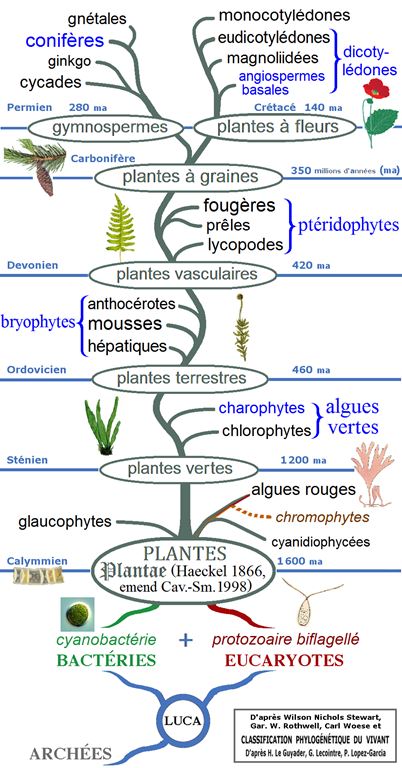
Classification
- Classique : en haut de l'écran, sous le coeur.
- Phylogénétique :
- Clade 4 : Angiospermes ;
- Clade 3 : Dicotylédones_vraies ;
- Clade 2 : Rosidées ;
- Clade 1 : Fabidées ;
- Ordre APN : Rosales ;
- Famille APN : Rosaceae ;
À droite, cet arbre phylogénétique des plantes montre les principaux clades et groupes traditionnels (monophylétiques en noir et paraphylétiques en bleu).
Dénominations
- Nom botanique : Potentilla fulgens Diels
- Noms anglais et locaux : Bajrdanti, Buitara, Lyngiangbru
Description et culture
Tableau récapitulatif
Parties comes-tibles Note comest. (1-5) Note medic. (1-5) (Zones de) Rusticité Besoins en 
Besoins en  (1-3)
(1-3)Périodes de semis et récoltes Graines au gramme Durée de viabilité Profon-deur semis Espace-ment plants Espace-ment lignes Durée germi-native Durée avant récolte J F M A M J
J A S O N D
J F M A M J
J A S O N D
- dont infos de 0FPI ("FOOD PLANTS INTERNATIONAL", en anglais) :
Description :
Une herbe. Elle est dressé et continue de croître d'année en année. Il pousse de 15 à 75 cm de hauteur. Il a un porte-greffe épais. Les feuilles sont composées et divisées en folioles le long de la tige. Les racines près du sol mesurent 4 à 30 cm de long et ont 5 à 13 paires de folioles. Les feuilles sur les tiges sont blanches en dessous. Les fleurs sont jaunes. Ils mesurent 1 à 2 cm de diamètre. Ils sont en groupes bondés à l'extrémité de l'usine{{{0(+x) (traduction automatique).
Original : A herb. It is erect and keeps growing from year to year. It grows 15-75 cm tall. It has a thick rootstock. The leaves are compound and divided into leaflets along the stalk. The roots near the ground are 4-30 cm long and have 5-13 pairs of leaflets. The leaves on the stems are white underneath. The flowers are yellow. They are 1-2 cm across. They are in crowded groups at the end of the plant{{{0(+x).
Culture :
Il peut être cultivé par graines et par parties souterraines{{{0(+x) (traduction automatique).
Original : It can be grown by seed and by underground parts{{{0(+x).
 Consommation (rapports de comestibilité, parties utilisables et usages alimentaires correspondants)
Consommation (rapports de comestibilité, parties utilisables et usages alimentaires correspondants)Parties comestibles :
racines, fruits{{{0(+x) (traduction automatique). Original : Roots, Fruit{{{0(+x).Détails :
Les racines sont consommées avec les noix d'arec et les feuilles de piment de bétel. Les fruits mûrs sont consommés{{{0(+x) (traduction automatique).
Original : The roots are eaten along with areca nuts and betel pepper leaves. The ripe fruit are eaten{{{0(+x).
Partie testée :
/ Risques et précautions à prendre
Risques et précautions à prendrenéant, inconnus ou indéterminés.
Autres infos
dont infos de 0FPI ("FOOD PLANTS INTERNATIONAL", en anglais) :
Distribution :
C'est une plante subtropicale. Dans l'Himalaya indien, il pousse entre 2 300 et 3 000 m d'altitude{{{0(+x) (traduction automatique).
Original : It is a subtropical plant. In the Indian Himalayas it grows between 2,300-3,000 m above sea level{{{0(+x).
Localisation :
Asie, Bhoutan, Chine, Himalaya, Inde, Myanmar, Népal, Inde du nord-est, Tibet{{{0(+x) (traduction automatique).
Original : Asia, Bhutan, China, Himalayas, India, Myanmar, Nepal, Northeastern India, Tibet{{{0(+x).
Notes :
Il est utilisé en médecine{{{0(+x) (traduction automatique).
Original : It is used in medicine{{{0(+x).
Liens, sources et/ou références
Liens :
/ ;Sources et/ou références :
bibliographie (liste des sources et/ou références de l'encyclopédie)
dont classification : IPNI ("International Plant Names Index", en anglais) ; Kew (POWO - "Plant Of the World Online", "Royal Botanical Garden", en anglais) ;
dont livres et bases de données : 0FPI ("FOOD PLANTS INTERNATIONAL", en anglais) ;
dont bibliographie/références de 0FPI ("FOOD PLANTS INTERNATIONAL", en anglais) :
Ambasta, S.P. (Ed.), 2000, The Useful Plants of India. CSIR India. p 487 ; Radha, B., et al, 2013, Wild Edible Plant Resources of the Lohba Range of Kedarnath Forest Division (KFD), Garhwal Himalaya, India. Int. Res J. Biological Sci. Vol. 2 (11), 65-73 ; Rao, R.R. & Neogi, B., 1980, Observation on the Ethnobotany of the Khasi and Garo tribes in Meghalaya (India). J. Econ. Tax. Bot. Vol. 1 pp 157-162
Recherche de/pour :
- "Potentilla fulgens" sur Google (pages et
images) ;
TPL ("The Plant List", en anglais) ;
GRIN ("Germplasm Resources Information Network", en anglais) ;
TROPICOS (en anglais) ;
Tela Botanica ;
Pl@ntNet ;
Pl@ntUse ;
"Plants For A Future" (en anglais) ;
"Useful Tropical Plants" (en anglais) ou
"Useful Temperate Plants" (en anglais) ;
- "Potentilla fulgens" sur Google (pages et
images) ;
TPL ("The Plant List", en anglais) ;
GRIN ("Germplasm Resources Information Network", en anglais) ;
TROPICOS (en anglais) ;
Tela Botanica ;
Pl@ntNet ;
Pl@ntUse ;
"Plants For A Future" (en anglais) ;
"Useful Tropical Plants" (en anglais) ou
"Useful Temperate Plants" (en anglais) ;
Espèces du même genre (Potentilla)
33 taxons
- Fraisier de Duchesne
- Potentille
- Potentille à divisions nombreuses
- Potentille ansérine
- Potentille argentée
- Potentille couchée
- Potentille droite
- Potentille du Népal
- Potentille printanière
- Potentille rampante
- Tormentille
- Potentilla anserina L. (Potentille ansérine)
- Potentilla argentea Don ex Trevelyan (Potentille argentée)
- Potentilla atrosanguinea Raf.
- Potentilla bicolor Lindl.
- Potentilla bifurca L.
- Potentilla chinensis Ser.
- Potentilla cuneata Wall. ex Lehm.
- Potentilla discolor Bellardi ex Colla
- Potentilla egedei
- Potentilla erecta (L.) Raeusch. (Tormentille)
- Potentilla flagellaris D.F.K.Schltdl.
- Potentilla fragarioides Naruh. & Tak.Sato
- Potentilla freyniana Bornm.
- Potentilla fruticosa L.
- Potentilla glandulosa Lindl.
- Potentilla indica (Fraisier de Duchesne)
- Potentilla kleiniana Wight & Arn.
- Potentilla leschenaultiana Ser.
- Potentilla leuconata
- Potentilla lineata Trevir.
- Potentilla monanthes Lindl. ex Wall.
- Potentilla multifida L. (Potentille à divisions nombreuses)
- Potentilla nepalensis Raf. (Potentille du Népal)
- Potentilla pacifica Howell
- Potentilla palustris
- Potentilla peduncularis D.Don
- Potentilla recta L. (Potentille droite)
- Potentilla reptans L. (Potentille rampante)
- Potentilla rupestris L.
- Potentilla speciosa Willd. (Potentille)
- Potentilla supina Michx. (Potentille couchée)
- Potentilla verna L. (Potentille printanière)
Espèces de la même famille (Rosaceae)
1223 taxons
- Abricot prune
- Abricotier
- Abricotier du japon
- Aigremoine eupatoire
- Alchémille à folioles soudées
- Alchémille brillante
- Alchémille commune
- Alchémille des champs
- Alchémille fendue
- Alchémille glabre
- Alchémille hybride
- Alchémille molle
- Alisier
- Alisier de Mougeot
- Alisier de suède
- Alouchier
- Amandier
- Amandier nain
- Amandier-nain trilobé
- Amélanchier à feuilles d'aulne
- Amélanchier à feuilles ovales
- Amélanchier à grappes
- Amélanchier de lamarck
- Amélanchier du canada
- Amélanchier glabre
- Aronie à fruits noirs
- Aronie pourpre
- Aronie rouge
- Aubépine
- Aubépine à feuilles de tanaisie
- Aubépine d'Orient
- Aubépine de Lavallée
- Aubépine du Kansas
- Aubépine du lac Champlain
- Aubépine du Sinaï
- Aubépine noire
- Aubépine orientale
- Aubépine russe
- Aubépine subsoyeuse
- Aubépine succulente
- Azerole
- Barbe-de-bouc
- Benoîte à fruits variables
- Benoîte à grandes feuilles
- Benoîte aquatique
- Benoîte commune ou benoite commune
- Benoîte des montagnes
- Buisson ardent
- Cenellier de l'est
- Cenellier de l'ouest
- Acaena anserinifolia (Forst. & Forst.f.) Druce
- Agrimonia coreana Nakai
- Agrimonia eupatoria L. (Aigremoine eupatoire)
- Agrimonia odorata Mill.
- Agrimonia pilosa Kitam.
- Alchemilla alpina L. (Satinée)
- Alchemilla conjuncta Bab. (Alchémille à folioles soudées)
- Alchemilla fissa Hornem. (Alchémille fendue)
- Alchemilla glabra Buser (Alchémille glabre)
- Alchemilla hybrida Brgger (Alchémille hybride)
- Alchemilla mollis (Alchémille molle)
- Alchemilla plicatula Gand.
- Alchemilla splendens Christ (Alchémille brillante)
- Alchemilla vulgaris L. (Alchémille commune)
- Alchemilla xanthoclora
- Amelanchier alnifolia (Nutt.) Nutt. ex M. Roem. (Amélanchier à feuilles d'aulne)
- Amelanchier amabilis Wiegand
- Amelanchier arborea
- Amelanchier asiatica
- Amelanchier bartramiana
- Amelanchier basalticola Piper
- Amelanchier canadensis (L.) Medik. (Amélanchier du canada)
- Amelanchier confusa
- Amelanchier cretica
- Amelanchier cusickii Fernald
- Amelanchier humilis Wiegand
- Amelanchier huroensis
- Amelanchier interior E.L.Nielsen
- Amelanchier intermedia Blanch.
- Amelanchier laevis Wiegand (Amélanchier glabre)
- Amelanchier lamarckii F. G. Schroed. (Amélanchier de lamarck)
- Amelanchier oblongifolia Wiegand
- Amelanchier obovalis
- Amelanchier obovata Knowlt.
- Amelanchier ovalis Medik. (Amélanchier à feuilles ovales)
- Amelanchier pallida Greene
- Amelanchier parviflora Douglas ex Hook.
- Amelanchier pumila
- Amelanchier sanguinea Decne.
- Amelanchier spicata Decne. (Amélanchier à grappes)
- Amelanchier stolonifera Wiegand
- Amelanchier utahensis Koehne
- Amelanchier weigandii
- Amelanchier x grandiflora Rehder
- Amelanchier x grandiflora
- Amelasorbus jackii
- Amygdalus andersonii
- Amygdalus communis L.
- Amygdalus graeca Lindl.
- Amygdalus lycioides Spach
- ...







 donne accès au menu
  - encyclopédies des plantes alimentaires ;
 - page de recherche - reconnaissance (identification) de plantes ;
 - page du calendrier lunaire et son générateur (au format PDF et JPG) ;
 - tableau récapitulatif ;
 - générateur de potées (soupes), avec estimation des apports nutrionnels et du coût;
 - générateur de codes QR ;
 - page des archives avec de nombreux documents sur différents thèmes complémentaires comme la botanique, les légumes,
les champignons, la cuisine, le bien-être ainsi que différents MOOC mais également des liens vers les archives de l'association ;
- page des archives avec de nombreux documents sur différents thèmes complémentaires comme la botanique, les légumes,
les champignons, la cuisine, le bien-être ainsi que différents MOOC mais également des liens vers les archives de l'association ;

 ou
ou
 permettant de passer du format standard à l'AMP (et vice-versa), lequel est simplifié et donc plus rapide.
 pour le fruit (et/ou les graines, la pulpe, etc...),
 pour les fleurs (et/ou pétales, calice...),
 pour les feuilles (et/ou la tige, les pousses...),
 pour les racines,
 pour le tronc (et/ou l'écorce, la sève...), et enfin
 pour les champignons,
puis les notes alimentaires et médicinales (de 1 à 5 étoiles), la rusticité (résistance au froid/gel)
et pour finir un résumé.
pour les champignons,
puis les notes alimentaires et médicinales (de 1 à 5 étoiles), la rusticité (résistance au froid/gel)
et pour finir un résumé. menant ici 🙂
 ,
,  et
et





 ,
,


 Encyclopédie(s)
 Recherche-Reconnaissance
 Tableau récapitulatif
 Codes QR
 Archives
 Calendrier(s) lunaire(s)
  Potées
 Re-naturation/naturalisation
 Affichettes, herbiers &
co.
Affichettes, herbiers &
co. menu
menu galerie