Eucalyptus rougeâtre
(Eucalyptus rubida)


Un arbre de taille moyenne à grande. Il atteint 12-30 m de haut. Il s'étend sur 10-20 m de diamètre. Il a une couronne ouverte. L'écorce est rouge et la vieille écorce es ... (traduction automatique)
→suite


Affich., herbiers & co.
Eucalyptus rougeâtre
Un arbre de taille moyenne à grande. Il atteint 12-30 m de haut. Il s'étend sur 10-20 m de diamètre. Il a une couronne ouverte. L'écorce est rouge et la vieille écorce est brun grisâtre. Il peut deve... (traduction automatique) →suite

![Zoom illustration Eucalyptus rubida, Par Maiden J.H. (Forest Flora of New South Wales, vol. 7: t. 237, 1917-1921) [n.a.], via plantillustrations](inc/images/illustrations/eucalyptus_rubida.jpg)
Eucalyptus rubida
Classification
- Classique : en haut de l'écran, sous le coeur.
- Phylogénétique :
- Clade 4 : Angiospermes ;
- Clade 3 : Dicotylédones_vraies ;
- Clade 2 : Rosidées ;
- Clade 1 : Malvidées ;
- Ordre APN : Myrtales ;
- Famille APN : Myrtaceae ;
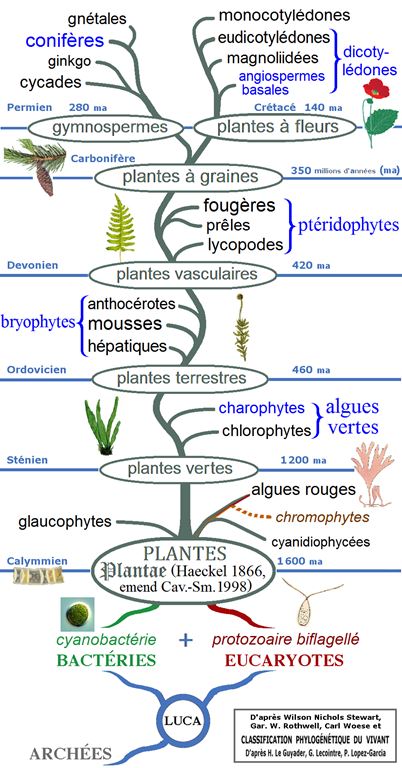
À droite, cet arbre phylogénétique des plantes montre les principaux clades et groupes traditionnels (monophylétiques en noir et paraphylétiques en bleu).
Dénominations
- Nom botanique : Eucalyptus rubida H.Deane & Maiden (1899)
- Noms anglais et locaux : candlebark, candlebark gum
Description et culture
Tableau récapitulatif
Parties comes-tibles Note comest. (1-5) Note medic. (1-5) (Zones de) Rusticité Besoins en 
Besoins en  (1-3)
(1-3)Périodes de semis et récoltes Graines au gramme Durée de viabilité Profon-deur semis Espace-ment plants Espace-ment lignes Durée germi-native Durée avant récolte
J F M A M J
J A S O N D
J F M A M J
J A S O N D
- dont infos de 0FPI ("FOOD PLANTS INTERNATIONAL", en anglais) :
Description :
Un arbre de taille moyenne à grande. Il atteint 12-30 m de haut. Il s'étend sur 10-20 m de diamètre. Il a une couronne ouverte. L'écorce est rouge et la vieille écorce est brun grisâtre. Il peut devenir rose en hiver avant de révéler la nouvelle écorce de crème. L'écorce se décolle en lanières et s'écaille. Les jeunes feuilles sont par paires et sans tiges. Les feuilles adultes sont étroites et longues de 15 cm. Ils sont alternes et ont des tiges. Ils sont gris-vert. Les bourgeons sont en forme de losange et par trois. Ils ont souvent un revêtement cireux. Les fleurs sont petites et crème. La capsule est en forme de cône ou ronde avec des valves qui dépassent{{{0(+x) (traduction automatique).
Original : A medium to tall tree. It grows 12-30 m tall. It spreads 10-20 m across. It has an open crown. The bark is red and the old bark is greyish brown. It may turn pink in winter before revealing the new cream bark. The bark peels in strips and flakes off. Young leaves are in pairs and without stalks. The adult leaves are narrow and 15 cm long. They are alternate and have stalks. They are grey-green. The buds are diamond shaped and in threes. They often have a waxy coating. The flowers are small and cream. The capsule is cone shaped or round with valves that stick out{{{0(+x).
Production :
Un arbre peut produire 9 kg de manne par an{{{0(+x) (traduction automatique).
Original : A tree can produce 9 kg of manna during a year{{{0(+x).
 Consommation (rapports de comestibilité, parties utilisables et usages alimentaires correspondants)
Consommation (rapports de comestibilité, parties utilisables et usages alimentaires correspondants)Feuille (feuilles et/ou tiges/rameaux : exsudat{{{(dp*)/manne {lerp}{{{0(+x)(dp*)) comestible0(+x).
Détails :
Il produit une manne comestible ; un arbre peut produire 9 kg de manne par an{{{0(+x) ; cette sorte de manne serait en faite une substance provoquée par un insecte : un miellat (appelé lerp) produit par un psylle{{{(dp*). Cette manne est-elle bien produite au niveau des feuilles et tiges ? (qp*)
Partie testée :
/ Risques et précautions à prendre
Risques et précautions à prendreATTENTION : le citronellal ou rhodinal, une huile essentielle présente dans la plupart des espèces d'eucalyptus{{{5(+), est très dangereux à plus ou moins haute(s) dose(s) ; voir lien pfaf ("5") d'une autre espèce d'Eucalyptus, pour plus d'informations{{{(dp*).
Galerie(s)
Par Maiden J.H. (Forest Flora of New South Wales, vol. 7: t. 237, 1917-1921) [n.a.], via plantillustrations
✖
Autres infos
dont infos de 0FPI ("FOOD PLANTS INTERNATIONAL", en anglais) :
Distribution :
Il pousse dans les régions tempérées. Il peut pousser dans les régions subtropicales. Il a besoin de sols bien drainés. Il peut pousser en plein soleil ou à l'ombre légère. Il peut supporter de fortes gelées. Il pousse dans les forêts herbeuses et boisées sur des sols pauvres en mudstone dans les régions plus sèches de Tasmanie. Il convient aux zones de rusticité 8-9. Herbier de Tasmanie. Arboretum Tasmania{{{0(+x) (traduction automatique).
Original : It grows in temperate regions. It can grow in the subtropics. It needs well drained soils. It can grow in full sun or light shade. It can stand heavy frosts. It grows on grassy forests and woodland on poor mudstone soils in drier areas of Tasmania. It suits hardiness zones 8-9. Tasmania Herbarium. Arboretum Tasmania{{{0(+x).
Localisation :
Australie *, Tasmanie *{{{0(+x) (traduction automatique).
Original : Australia*, Tasmania*{{{0(+x).
Notes :
Il existe au moins 500 espèces d'eucalyptus principalement originaires d'Australie{{{0(+x) (traduction automatique).
Original : There are at least 500 Eucalyptus species mostly originally in Australia{{{0(+x).
Liens, sources et/ou références
Liens :
/ ;Sources et/ou références :
bibliographie (liste des sources et/ou références de l'encyclopédie)
dont classification : IPNI ("International Plant Names Index", en anglais) ; TPL ("The Plant List", en anglais) ; GRIN ("Germplasm Resources Information Network", en anglais) ; Kew (POWO - "Plant Of the World Online", "Royal Botanical Garden", en anglais) ; Tela Botanica ;
dont livres et bases de données : 0FPI ("FOOD PLANTS INTERNATIONAL", en anglais) ;
dont bibliographie/références de 0FPI ("FOOD PLANTS INTERNATIONAL", en anglais) :
Boomsma, C.D., 1972, Native Tree of South Australia. Woods & Forests Department South Australia, Bulletin No.19. p 168 ; Cribb, A.B. & J.W., 1976, Wild Food in Australia, Fontana. p 187 ; Cundall, P., (ed.), 2004, Gardening Australia: flora: the gardener's bible. ABC Books. p 576 ; Curtis, W.M., 1956, The Students Flora of Tasmania Vol 1 p 210, 211 ; Donkin, ; Elliot, W.R., & Jones, D.L., 1992, Encyclopedia of Australian Plants suitable for cultivation. Vol 4. Lothian. p 199 ; Etherington, K., & Imwold, D., (Eds), 2001, Botanica's Trees & Shrubs. The illustrated A-Z of over 8500 trees and shrubs. Random House, Australia. p 307 ; Facciola, S., 1998, Cornucopia 2: a Source Book of Edible Plants. Kampong Publications, p 141 ; Gilfedder, L et al, 2003, The Nature of the Midlands. Midlands Bushweb. PO Box 156 Longford, Tasmania. p 131 ; Hibbert, M., 2002, The Aussie Plant Finder 2002, Florilegium. p 98 ; Holliday, I., 1989, A Field Guide to Australian Trees. Hamlyn. p 176 ; Kirkpatrick, J.B. & Backhouse, S., 1985, Native Trees of Tasmania. p 92 ; Lazarides, M. & Hince, B., 1993, Handbook of Economic Plants of Australia, CSIRO. p 107 ; Lord, E.E., & Willis, J.H., 1999, Shrubs and Trees for Australian gardens. Lothian. p 32 ; Molyneux, B. and Forrester, S., 1997, The Austraflora A-Z of Australian Plants. Reed. p 92 ; Proc. Linn. Soc. New South Wales 24:456. 1899 ; Tasmanian Herbarium Vascular Plants list p 41 ; Whiting, J. et al, 2004, Tasmania's Natural Flora. Tasmania's Natural Flora Editorial Committee PO Box 194, Ulverstone, Tasmania, Australia 7315 p 234 ; Young, J., (Ed.), 2001, Botanica's Pocket Trees and Shrubs. Random House. p 360
Recherche de/pour :
- "Eucalyptus rubida" sur Google (pages et
images) ;
TROPICOS (en anglais) ;
Pl@ntNet ;
Pl@ntUse ;
"Plants For A Future" (en anglais) ;
"Useful Tropical Plants" (en anglais) ou
"Useful Temperate Plants" (en anglais) ;
- "Eucalyptus rougeâtre" sur Google (pages, images et recettes) ;
- "Eucalyptus rubida" sur Google (pages et
images) ;
TROPICOS (en anglais) ;
Pl@ntNet ;
Pl@ntUse ;
"Plants For A Future" (en anglais) ;
"Useful Tropical Plants" (en anglais) ou
"Useful Temperate Plants" (en anglais) ;
Espèces du même genre (Eucalyptus)
75 taxons
- Eucalyptus
- Eucalyptus à manne
- Eucalyptus à trois fruits
- Eucalyptus à urnes
- Eucalyptus amandier
- Eucalyptus argenté
- Eucalyptus bois-blanc
- Eucalyptus cendré
- Eucalyptus coccifère
- Eucalyptus de Bridges
- Eucalyptus de Johnston
- Eucalyptus de Macarthur
- Eucalyptus de Nichol
- Eucalyptus de Perrin
- Eucalyptus de Smith
- Eucalyptus des marais
- Eucalyptus du mont Delegate
- Eucalyptus du mont Jeffcott
- Eucalyptus linéaire
- Eucalyptus oblique
- Eucalyptus ovale
- Eucalyptus pauciflore
- Eucalyptus pulvérulent
- Eucalyptus rayonnant
- Eucalyptus royal
- Eucalyptus subulé
- Gommier bleu
- Gommier cidre
- Gommier des rivières
- Eucalyptus amygdalina Labill. (Eucalyptus amandier)
- Eucalyptus bridgesiana R. T. Baker (Eucalyptus de Bridges)
- Eucalyptus caesia Benth.
- Eucalyptus camaldulensis Dehnh. (Gommier des rivières)
- Eucalyptus cephalocarpa Blakely (Eucalyptus argenté)
- Eucalyptus cinerea F.Muell. ex Benth. (Eucalyptus cendré)
- Eucalyptus citriodora Hook.
- Eucalyptus coccifera Hook. f. (Eucalyptus coccifère)
- Eucalyptus coolabah Blakely & Jacobs
- Eucalyptus delegatensis R.T.Baker (Eucalyptus du mont Delegate)
- Eucalyptus dives Schauer
- Eucalyptus dumosa A. Cunn. ex J. Oxley
- Eucalyptus elata Dehnh.
- Eucalyptus eximia S.Schauer
- Eucalyptus gamophylla F. Muell.
- Eucalyptus globulus Labill. (Gommier bleu)
- Eucalyptus gomphocephala A.Cunn. ex DC. (Eucalyptus)
- Eucalyptus gracilis F.Muell.
- Eucalyptus gummifera
- Eucalyptus gunnii Hook.f. (Gommier cidre)
- Eucalyptus incrassata Labill.
- Eucalyptus intertexta R. T. Baker
- Eucalyptus johnstonii Maiden (Eucalyptus de Johnston)
- Eucalyptus largiflorens F. Muell.
- Eucalyptus leptopoda Benth.
- Eucalyptus leucoxylon F. Muell. (Eucalyptus bois-blanc)
- Eucalyptus loxophleba Benth.
- Eucalyptus macarthurii H.Deane & Maiden (Eucalyptus de Macarthur)
- Eucalyptus macrorhyncha F. Muell. ex Benth.
- Eucalyptus maculata Hook.
- Eucalyptus mannifera Mudie (Eucalyptus à manne)
- Eucalyptus melliodora A.Cunn. ex Schauer
- Eucalyptus microcorys F. Muell.
- Eucalyptus microtheca F. Muell.
- Eucalyptus miniata A. Cunn. ex Schauer
- Eucalyptus nicholii Maiden & Blakely (Eucalyptus de Nichol)
- Eucalyptus normantonensis Maiden & Cambage
- Eucalyptus nova-anglica H. Deane & Maiden
- Eucalyptus obliqua L'Hér. (Eucalyptus oblique)
- Eucalyptus oleosa F.Muell. ex Miq.
- Eucalyptus olida L.A.S.Johnson & K.D.Hill
- Eucalyptus ovata Labill. (Eucalyptus ovale)
- Eucalyptus oxymitra Blakely
- Eucalyptus pachyphylla F. Muell.
- Eucalyptus paniculata Sm.
- Eucalyptus pauciflora Sieber ex Spreng. (Eucalyptus pauciflore)
- Eucalyptus perriniana F.Muell. ex Rodway (Eucalyptus de Perrin)
- Eucalyptus phoenicea F. Muell.
- Eucalyptus piperita Sm.
- Eucalyptus polybractea R. T. Baker (Eucalyptus du mont Jeffcott)
- ...
Espèces de la même famille (Myrtaceae)
772 taxons
- Araca pera
- Araza
- Arbre à thé
- Arbre à thé au parfum citronnné
- Arbre anis (tp* de "aniseed tree")
- Baie de noël
- Beach cherry
- Bois d'inde
- Cabelluda
- Cagaita
- Cajeput
- Cedar bay cherry
- Cerise bleue (tp* de "blue cherry")
- Cerisier d'australie
- Cerisier de cayenne
- Cerisier de rio grande
- Cerisier du brésil
- Ceylon hill cherry
- Coronille
- Eucalyptus
- Eucalyptus à manne
- Eucalyptus à trois fruits
- Eucalyptus à urnes
- Eucalyptus amandier
- Eucalyptus argenté
- Eucalyptus bois-blanc
- Eucalyptus cendré
- Eucalyptus citronné
- Eucalyptus coccifère
- Eucalyptus de Bridges
- Eucalyptus de Johnston
- Eucalyptus de Macarthur
- Eucalyptus de Nichol
- Eucalyptus de Perrin
- Eucalyptus de Smith
- Eucalyptus des marais
- Eucalyptus du mont Delegate
- Eucalyptus du mont Jeffcott
- Eucalyptus linéaire
- Eucalyptus oblique
- Eucalyptus ovale
- Eucalyptus pauciflore
- Eucalyptus pulvérulent
- Eucalyptus rayonnant
- Eucalyptus royal
- Eucalyptus subulé
- Feijoa
- Giroflier
- Gommier bleu
- Gommier cidre
- Acca sellowiana (O. Berg) Burret (Feijoa)
- Aluta maisonneivei
- Amomyrtus luma (Luma)
- Amomyrtus meli
- Angophora floribunda
- Archirhodomyrtus beckleri
- Astartea fascicularis
- Aulomyrcia vaccinifolia
- Austromyrtus dulcis (C.T.White) L.S.Sm.
- Austromyrtus dulcis x tenuifolia
- Austromyrtus tenuifolia
- Backhousia anisata Vickery
- Backhousia citriodora F.Muell. (Myrte citronnée)
- Backhousia myrtifolia Hook. & Harv. (Myrte cannelle)
- Baeckea frutescens L.
- Baeckea gunniana S.Schauer ex Walp.
- Blepharocalyx cruckshanksii
- Blepharocalyx salicifolius
- Callistemon citrinus (Curtis) Skeels (Rince-bouteilles)
- Callistemon polandii F.M.Bailey
- Callistemon viminalis
- Calothamnus quadrifidus R.Br.
- Calothamnus sanguineus Labill.
- Calycolpus calophyllus
- Calycolpus goetheanus
- Calycolpus legrandii Mattos
- Calycolpus moritzianus
- Calycorectes acutatus
- Calycorectes grandifolius O.Berg
- Calycorectes sp.
- Calyptranthes aromatica A.St.-Hil.
- Calyptranthes clusiifolia O.Berg
- Calyptranthes concinna DC.
- Calyptranthes grandifolia O.Berg
- Calyptranthes hintonii Lundell
- Calyptranthes longifolia O.Berg
- Calyptranthes lucida Mart. ex DC.
- Calyptranthes macrophylla O.Berg
- Calyptranthes nigrescens B.Holst
- Calyptranthes pallens Griseb.
- Calyptranthes paniculata Raeusch.
- Calyptranthes plicata McVaugh
- Calyptranthes schiediana
- Calyptranthes speciosa Sagot
- Calyptranthes syzygium
- Calyptranthes variabilis O.Berg
- Calyptranthes widgreniana O.Berg
- Calyptranthes zuzygium Blanco
- Calytrix tetragona Labill.
- Campomanesia adamantium (Cambess.) O.Berg (Guabiroba blanche)
- ...







 donne accès au menu
  - encyclopédies des plantes alimentaires ;
 - page de recherche - reconnaissance (identification) de plantes ;
 - page du calendrier lunaire et son générateur (au format PDF et JPG) ;
 - tableau récapitulatif ;
 - générateur de potées (soupes), avec estimation des apports nutrionnels et du coût;
 - générateur de codes QR ;
 - page des archives avec de nombreux documents sur différents thèmes complémentaires comme la botanique, les légumes,
les champignons, la cuisine, le bien-être ainsi que différents MOOC mais également des liens vers les archives de l'association ;
- page des archives avec de nombreux documents sur différents thèmes complémentaires comme la botanique, les légumes,
les champignons, la cuisine, le bien-être ainsi que différents MOOC mais également des liens vers les archives de l'association ;

 ou
ou
 permettant de passer du format standard à l'AMP (et vice-versa), lequel est simplifié et donc plus rapide.
 pour le fruit (et/ou les graines, la pulpe, etc...),
 pour les fleurs (et/ou pétales, calice...),
 pour les feuilles (et/ou la tige, les pousses...),
 pour les racines,
 pour le tronc (et/ou l'écorce, la sève...), et enfin
 pour les champignons,
puis les notes alimentaires et médicinales (de 1 à 5 étoiles), la rusticité (résistance au froid/gel)
et pour finir un résumé.
pour les champignons,
puis les notes alimentaires et médicinales (de 1 à 5 étoiles), la rusticité (résistance au froid/gel)
et pour finir un résumé. menant ici 🙂
 ,
,  et
et





 ,
,


 Encyclopédie(s)
 Recherche-Reconnaissance
 Tableau récapitulatif
 Codes QR
 Archives
 Calendrier(s) lunaire(s)
  Potées
 Re-naturation/naturalisation
 Affichettes, herbiers &
co.
Affichettes, herbiers &
co. menu
menu galerie