Melaleuca argentea
Pas d'illustration
pour le moment 😕

Un grand arbre qui s'étend. Il pousse de 10 à 20 m de haut. Il s'étend sur 10-25 m de large. Les branches sont minces et pendent vers le bas. Les feuilles sont vert argentà ... (traduction automatique)
→suite


Affich., herbiers & co.
Melaleuca argentea

Un grand arbre qui s'étend. Il pousse de 10 à 20 m de haut. Il s'étend sur 10-25 m de large. Les branches sont minces et pendent vers le bas. Les feuilles sont vert argenté. L'écorce est de papier et ... (traduction automatique) →suite
Pas d'illustration
pour le moment 😕
Pas d'illustration
pour le moment 😕
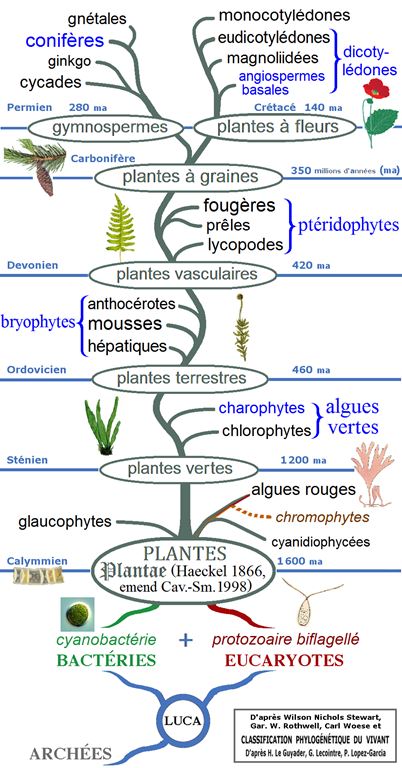
Classification
- Classique : en haut de l'écran, sous le coeur.
- Phylogénétique :
- Clade 4 : Angiospermes ;
- Clade 3 : Dicotylédones_vraies ;
- Clade 2 : Rosidées ;
- Clade 1 : Malvidées ;
- Ordre APN : Myrtales ;
- Famille APN : Myrtaceae ;
À droite, cet arbre phylogénétique des plantes montre les principaux clades et groupes traditionnels (monophylétiques en noir et paraphylétiques en bleu).
Dénominations
- Nom botanique : Melaleuca argentea W.Fitzg.
- Noms anglais et locaux : Silver-leaved Paperbark
Description et culture
Tableau récapitulatif
Parties comes-tibles Note comest. (1-5) Note medic. (1-5) (Zones de) Rusticité Besoins en 
Besoins en  (1-3)
(1-3)Périodes de semis et récoltes Graines au gramme Durée de viabilité Profon-deur semis Espace-ment plants Espace-ment lignes Durée germi-native Durée avant récolte J F M A M J
J A S O N D
J F M A M J
J A S O N D
- dont infos de 0FPI ("FOOD PLANTS INTERNATIONAL", en anglais) :
Description :
Un grand arbre qui s'étend. Il pousse de 10 à 20 m de haut. Il s'étend sur 10-25 m de large. Les branches sont minces et pendent vers le bas. Les feuilles sont vert argenté. L'écorce est de papier et gris clair. Il est doux et superposé. Les feuilles sont produites en alternance. Ils sont argentés et couverts de poils soyeux lorsqu'ils sont jeunes. Les feuilles sont longues et étroites et les plus larges au milieu mais se rétrécissent à chaque extrémité. Ils mesurent 5 à 14 cm de long sur 0,6 à 2 cm de large. Il y a 3-5 veines le long de la feuille. Les feuilles sont pointues à la pointe. Le pédoncule est velu et mesure 0,4-1 cm de long. Les fleurs sont crème avec de nombreuses étamines. Ils ont un fort parfum. Les fleurs mesurent 1,2 à 1,5 cm de long et sont dépourvues de pédoncule. Les pointes en forme de cylindre peuvent mesurer de 5 à 12 cm de long sur 2,5 à 3 cm de large. Les pointes se produisent en grappes de 4 près de l'extrémité des branches. Les fruits sont de petites capsules ligneuses en forme de coupe. Ils n'ont pas de tiges et mesurent 0,3 cm de diamètre. Ils sont gris-brun à maturité. Ils ont beaucoup de très petites graines{{{0(+x) (traduction automatique).
Original : A tall spreading tree. It grows 10-20 m high. It spreads to 10-25 m wide. The branches are slender and hang downwards. The leaves are silvery-green. The bark is papery and light grey. It is soft and layered. The leaves are produced alternately. They are silvery and covered with silky hairs when young. The leaves are long and narrow and widest in the middle but tapering to each end. They are 5-14 cm long by 0.6-2 cm wide. There are 3-5 veins along the leaf. The leaves are pointed at the tip. The leaf stalk is hairy and 0.4-1 cm long. The flowers are cream with many stamens. They have a strong scent. Flowers are 1.2-1.5 cm long and stalkless. The form cylinder shaped spikes which can be 5-12 cm long by 2.5-3 cm wide. The spikes occur in clusters of 4 near the end of branches. The fruit are small cup-shaped woody capsules. They do not have stalks and are 0.3 cm across. They are grey-brown when ripe. They have many very small seeds{{{0(+x).
Production :
En Australie, les plantes fleurissent de juin à octobre et fructifient d'octobre à janvier{{{0(+x) (traduction automatique).
Original : In Australia, plants flower from June to October and fruit from October to January{{{0(+x).
Culture :
Les plantes peuvent être cultivées à partir de graines{{{0(+x) (traduction automatique).
Original : Plants can be grown from seed{{{0(+x).
 Consommation (rapports de comestibilité, parties utilisables et usages alimentaires correspondants)
Consommation (rapports de comestibilité, parties utilisables et usages alimentaires correspondants)Parties comestibles :
feuilles - aromatisantes{{{0(+x) (traduction automatique). Original : Leaves - flavouring{{{0(+x).Détails :
Les feuilles sont utilisées pour aromatiser la viande en cuisine{{{0(+x) (traduction automatique).
Original : The leaves are used to flavour meat in cooking{{{0(+x).
Partie testée :
/ Risques et précautions à prendre
Risques et précautions à prendrenéant, inconnus ou indéterminés.
Autres infos
dont infos de 0FPI ("FOOD PLANTS INTERNATIONAL", en anglais) :
Distribution :
Une plante tropicale. Il poussera dans les régions subtropicales et tempérées chaudes. Dans le Queensland tropical, il passe du niveau de la mer à 400 m d'altitude. Ils poussent naturellement le long des rives des ruisseaux d'eau douce. Ils sont sur des sols limoneux sableux. Le sol doit être bien drainé. Ils peuvent tolérer des inondations occasionnelles. Ils peuvent tolérer de légères gelées. Il peut pousser dans les zones semi-arides{{{0(+x) (traduction automatique).
Original : A tropical plant. It will grow in the subtropics and warm temperate regions. In tropical Queensland it grows from sea level to 400 m altitude. They grow naturally along the banks of freshwater creeks. They are on sandy loam soils. The soil needs to be well drained. They can tolerate occasional flooding. They can tolerate light frosts. It can grow in semi arid areas{{{0(+x).
Localisation :
Asie, Australie, Indochine, Pacifique, Papouasie-Nouvelle-Guinée, PNG, Asie du Sud-Est, Vietnam{{{0(+x) (traduction automatique).
Original : Asia, Australia, Indochina, Pacific, Papua New Guinea, PNG, SE Asia, Vietnam{{{0(+x).
Liens, sources et/ou références
Liens :
/ ;Sources et/ou références :
bibliographie (liste des sources et/ou références de l'encyclopédie)
dont classification : IPNI ("International Plant Names Index", en anglais) ; Kew (POWO - "Plant Of the World Online", "Royal Botanical Garden", en anglais) ;
dont livres et bases de données : 0FPI ("FOOD PLANTS INTERNATIONAL", en anglais) ;
dont bibliographie/références de 0FPI ("FOOD PLANTS INTERNATIONAL", en anglais) :
Barwick, M., 2004, Tropical and Subtropical Trees. A Worldwide Encyclopedic Guide. Thames and Hudson p 269 ; Bodkin, F., 1991, Encyclopedia Botanica. Cornstalk publishing, p 682 ; Brock, J., 1993, Native Plants of Northern Australia, Reed. p 250 (Photo) ; Cooper, W. and Cooper, W., 2004, Fruits of the Australian Tropical Rainforest. Nokomis Editions, Victoria, Australia. p 349 ; Doran, J.C., & Turnbull, J.W. (Eds), 1997, Australian Trees and Shrubs: species for land rehabilitation and farm plantings in the tropics. ACIAR Monograph No 24. p 312 ; Elliot, W.R., & Jones, D.L., 1993, Encyclopedia of Australian Plants suitable for cultivation. Vol 6. Lothian. p 322 (Drawing) ; Hearne, D.A., & Rance, S.J., 1975, Trees for Darwin and Northern Australia. AGPS, Canberra p 86, Colour Pl 4 ; Hibbert, M., 2002, The Aussie Plant Finder 2002, Florilegium. p 194 ; Kenneally, K.E., Edinger, D. C., and Willing T., 1996, Broome and Beyond, Plants and People of the Dampier Peninsula, Kimberley, Western Australia. Department of Conservation and Land Management. p 146 ; Lazarides, M. & Hince, B., 1993, Handbook of Economic Plants of Australia, CSIRO. p 160 ; Milson, J., 2000, Trees and Shrubs of north-west Queensland. DPI p 236 ; Molyneux, B. and Forrester, S., 1997, The Austraflora A-Z of Australian Plants. Reed. p 134 ; Norrington, L., & Campbell, C., 2001, Tropical Food Gardens. Bloomings Books. p 69 ; Paczkowska, G . & Chapman, A.R., 2000, The Western Australian Flora. A Descriptive Calatogue. Western Australian Herbarium. p 391 ; Petheram, R.J. and Kok, B., 2003, Plants of the Kimberley Region of Western Australia. UWA Press p 497 ; Townsend, K., 1994, Across the Top. Gardening with Australian Plants in the tropics. Society for Growing Australian Plants, Townsville Branch Inc. p 293 ; Western Mail (Perth). 16 Jun 1906 (J. & Proc. Roy. Soc. Western Australia 3:187. 1918) ; Wheeler, J.R.(ed.), 1992, Flora of the Kimberley Region. CALM, Western Australian Herbarium, p 535 ; Wightman, G. & Brown, J., 1994, Jawoyn Plant Identikit, Common Useful Plants in the Katherine Area of Northern Australia. Concervation Commission Northern Territory. p 28
Recherche de/pour :
- "Melaleuca argentea" sur Google (pages et
images) ;
TPL ("The Plant List", en anglais) ;
GRIN ("Germplasm Resources Information Network", en anglais) ;
TROPICOS (en anglais) ;
Tela Botanica ;
Pl@ntNet ;
Pl@ntUse ;
"Plants For A Future" (en anglais) ;
"Useful Tropical Plants" (en anglais) ou
"Useful Temperate Plants" (en anglais) ;
- "Melaleuca argentea" sur Google (pages et
images) ;
TPL ("The Plant List", en anglais) ;
GRIN ("Germplasm Resources Information Network", en anglais) ;
TROPICOS (en anglais) ;
Tela Botanica ;
Pl@ntNet ;
Pl@ntUse ;
"Plants For A Future" (en anglais) ;
"Useful Tropical Plants" (en anglais) ou
"Useful Temperate Plants" (en anglais) ;
Espèces du même genre (Melaleuca)
16 taxons
- Melaleuca acacioides F.Muell.
- Melaleuca alternifolia (Maiden & Betche) Cheel (Arbre à thé)
- Melaleuca bracteata F.Muell.
- Melaleuca cajuputi Powell (Cajeput)
- Melaleuca dealbata S.T.Blake
- Melaleuca ericifolia Andrews
- Melaleuca huegelii Endl.
- Melaleuca lasiandra F.Muell.
- Melaleuca leucadendra (L.) L. (Melaleuca leucadendron)
- Melaleuca linariifolia Sm.
- Melaleuca nervosa
- Melaleuca nodosa
- Melaleuca quinquenervia (Cav.) S.T.Blake (Niaouli)
- Melaleuca rhaphiophylla Schauer
- Melaleuca viridiflora Sol. ex Gaertn.
Espèces de la même famille (Myrtaceae)
772 taxons
- Araca pera
- Araza
- Arbre à thé
- Arbre à thé au parfum citronnné
- Arbre anis (tp* de "aniseed tree")
- Baie de noël
- Beach cherry
- Bois d'inde
- Cabelluda
- Cagaita
- Cajeput
- Cedar bay cherry
- Cerise bleue (tp* de "blue cherry")
- Cerisier d'australie
- Cerisier de cayenne
- Cerisier de rio grande
- Cerisier du brésil
- Ceylon hill cherry
- Coronille
- Eucalyptus
- Eucalyptus à manne
- Eucalyptus à trois fruits
- Eucalyptus à urnes
- Eucalyptus amandier
- Eucalyptus argenté
- Eucalyptus bois-blanc
- Eucalyptus cendré
- Eucalyptus citronné
- Eucalyptus coccifère
- Eucalyptus de Bridges
- Eucalyptus de Johnston
- Eucalyptus de Macarthur
- Eucalyptus de Nichol
- Eucalyptus de Perrin
- Eucalyptus de Smith
- Eucalyptus des marais
- Eucalyptus du mont Delegate
- Eucalyptus du mont Jeffcott
- Eucalyptus linéaire
- Eucalyptus oblique
- Eucalyptus ovale
- Eucalyptus pauciflore
- Eucalyptus pulvérulent
- Eucalyptus rayonnant
- Eucalyptus rougeâtre
- Eucalyptus royal
- Eucalyptus subulé
- Feijoa
- Giroflier
- Gommier bleu
- Acca sellowiana (O. Berg) Burret (Feijoa)
- Aluta maisonneivei
- Amomyrtus luma (Luma)
- Amomyrtus meli
- Angophora floribunda
- Archirhodomyrtus beckleri
- Astartea fascicularis
- Aulomyrcia vaccinifolia
- Austromyrtus dulcis (C.T.White) L.S.Sm.
- Austromyrtus dulcis x tenuifolia
- Austromyrtus tenuifolia
- Backhousia anisata Vickery
- Backhousia citriodora F.Muell. (Myrte citronnée)
- Backhousia myrtifolia Hook. & Harv. (Myrte cannelle)
- Baeckea frutescens L.
- Baeckea gunniana S.Schauer ex Walp.
- Blepharocalyx cruckshanksii
- Blepharocalyx salicifolius
- Callistemon citrinus (Curtis) Skeels (Rince-bouteilles)
- Callistemon polandii F.M.Bailey
- Callistemon viminalis
- Calothamnus quadrifidus R.Br.
- Calothamnus sanguineus Labill.
- Calycolpus calophyllus
- Calycolpus goetheanus
- Calycolpus legrandii Mattos
- Calycolpus moritzianus
- Calycorectes acutatus
- Calycorectes grandifolius O.Berg
- Calycorectes sp.
- Calyptranthes aromatica A.St.-Hil.
- Calyptranthes clusiifolia O.Berg
- Calyptranthes concinna DC.
- Calyptranthes grandifolia O.Berg
- Calyptranthes hintonii Lundell
- Calyptranthes longifolia O.Berg
- Calyptranthes lucida Mart. ex DC.
- Calyptranthes macrophylla O.Berg
- Calyptranthes nigrescens B.Holst
- Calyptranthes pallens Griseb.
- Calyptranthes paniculata Raeusch.
- Calyptranthes plicata McVaugh
- Calyptranthes schiediana
- Calyptranthes speciosa Sagot
- Calyptranthes syzygium
- Calyptranthes variabilis O.Berg
- Calyptranthes widgreniana O.Berg
- Calyptranthes zuzygium Blanco
- Calytrix tetragona Labill.
- Campomanesia adamantium (Cambess.) O.Berg (Guabiroba blanche)
- ...







 donne accès au menu
  - encyclopédies des plantes alimentaires ;
 - page de recherche - reconnaissance (identification) de plantes ;
 - page du calendrier lunaire et son générateur (au format PDF et JPG) ;
 - tableau récapitulatif ;
 - générateur de potées (soupes), avec estimation des apports nutrionnels et du coût;
 - générateur de codes QR ;
 - page des archives avec de nombreux documents sur différents thèmes complémentaires comme la botanique, les légumes,
les champignons, la cuisine, le bien-être ainsi que différents MOOC mais également des liens vers les archives de l'association ;
- page des archives avec de nombreux documents sur différents thèmes complémentaires comme la botanique, les légumes,
les champignons, la cuisine, le bien-être ainsi que différents MOOC mais également des liens vers les archives de l'association ;

 ou
ou
 permettant de passer du format standard à l'AMP (et vice-versa), lequel est simplifié et donc plus rapide.
 pour le fruit (et/ou les graines, la pulpe, etc...),
 pour les fleurs (et/ou pétales, calice...),
 pour les feuilles (et/ou la tige, les pousses...),
 pour les racines,
 pour le tronc (et/ou l'écorce, la sève...), et enfin
 pour les champignons,
puis les notes alimentaires et médicinales (de 1 à 5 étoiles), la rusticité (résistance au froid/gel)
et pour finir un résumé.
pour les champignons,
puis les notes alimentaires et médicinales (de 1 à 5 étoiles), la rusticité (résistance au froid/gel)
et pour finir un résumé. menant ici 🙂
 ,
,  et
et





 ,
,


 Encyclopédie(s)
 Recherche-Reconnaissance
 Tableau récapitulatif
 Codes QR
 Archives
 Calendrier(s) lunaire(s)
  Potées
 Re-naturation/naturalisation
 Affichettes, herbiers &
co.
Affichettes, herbiers &
co. menu
menu galerie