Ceratotheca sesamoides
Pas d'illustration
pour le moment 😕

Une herbe. Elle a une tige dressée et élancée. Il atteint 2-3 m de haut. Les feuilles ont des tiges. Les feuilles au sommet de la plante sont en forme de pointe de flèche ... (traduction automatique)
→suite


Affich., herbiers & co.
Ceratotheca sesamoides

Une herbe. Elle a une tige dressée et élancée. Il atteint 2-3 m de haut. Les feuilles ont des tiges. Les feuilles au sommet de la plante sont en forme de pointe de flèche et avec des dents dans leur pa... (traduction automatique) →suite
Pas d'illustration
pour le moment 😕
Pas d'illustration
pour le moment 😕
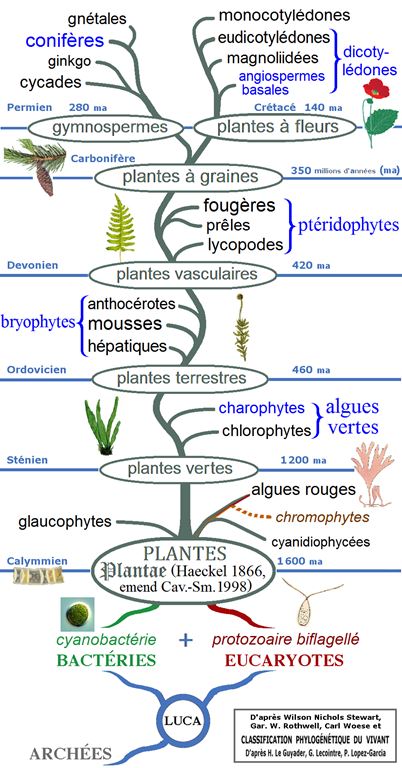
Classification
- Classique : en haut de l'écran, sous le coeur.
- Phylogénétique :
- Clade 4 : Angiospermes ;
- Clade 3 : Dicotylédones_vraies ;
- Clade 2 : Astéridées ;
- Clade 1 : Lamiidées ;
- Ordre APN : Lamiales ;
- Famille APN : Pedaliaceae ;
À droite, cet arbre phylogénétique des plantes montre les principaux clades et groupes traditionnels (monophylétiques en noir et paraphylétiques en bleu).
Dénominations
- Nom botanique : Ceratotheca sesamoides Endl.
- Synonymes : Sesamum heudelotii Stapf
- Noms anglais et locaux : False sesame
Description et culture
Tableau récapitulatif
Parties comes-tibles Note comest. (1-5) Note medic. (1-5) (Zones de) Rusticité Besoins en 
Besoins en  (1-3)
(1-3)Périodes de semis et récoltes Graines au gramme Durée de viabilité Profon-deur semis Espace-ment plants Espace-ment lignes Durée germi-native Durée avant récolte J F M A M J
J A S O N D
J F M A M J
J A S O N D
- dont infos de 0FPI ("FOOD PLANTS INTERNATIONAL", en anglais) :
Description :
Une herbe. Elle a une tige dressée et élancée. Il atteint 2-3 m de haut. Les feuilles ont des tiges. Les feuilles au sommet de la plante sont en forme de pointe de flèche et avec des dents dans leur partie inférieure. Les feuilles inférieures sont plus larges et ont des dents tout autour. Les fleurs sont en forme de tube. À la base de la tige florale, il y a une paire de petites glandes violettes sur la tige. Le fruit a 2 "cornes" à la fin{{{0(+x) (traduction automatique).
Original : A herb. It has an erect, slender stem. It grows 2-3 m tall. The leaves have stalks. The leaves at the top of the plant are arrowhead shaped and with teeth in their lower section. The lower leaves are wider and have teeth all around. The flowers are tube shaped. At the base of the flower stalk there is a pair of small purple glands on the stem. The fruit have 2 "horns" at the end{{{0(+x).
Production :
Les feuilles sont ramassées pendant la saison des pluies. Ils sont disponibles à d'autres moments si l'humidité du sol est suffisante. Ils peuvent être séchés et stockés{{{0(+x) (traduction automatique).
Original : Leaves are collected during the rainy season. They are available at other times if there is sufficient soil moisture. They can be dried and stored{{{0(+x).
Culture :
Les plantes sont cultivées à partir de graines. Les graines sont répandues au début des pluies{{{0(+x) (traduction automatique).
Original : Plants are grown from seeds. Seeds are broadcast at the beginning of rains{{{0(+x).
 Consommation (rapports de comestibilité, parties utilisables et usages alimentaires correspondants)
Consommation (rapports de comestibilité, parties utilisables et usages alimentaires correspondants)Parties comestibles :
feuilles, graines, gousses, légumes{{{0(+x) (traduction automatique). Original : Leaves, Seeds, Pods, Vegetable{{{0(+x).Détails :
Les feuilles sont consommées comme légume. Ils sont ramassés et fanés au soleil. Ils peuvent être ajoutés aux soupes. Les feuilles peuvent être conservées par séchage. Ils sont également séchés au soleil et pilés avec d'autres légumes et bouillis sous forme de pâte épaisse. Les graines se mangent comme des graines de sésame. Ils sont également mis dans des soupes. Les graines donnent une huile comestible{{{0(+x) (traduction automatique).
Original : The leaves are eaten as a vegetable. They are collected and wilted in the sun. They can be added to soups. Leaves can be preserved by drying. They are also dried in the sun and pounded with other vegetables and boiled as a thick paste. The seeds are eaten like sesame seeds. They are also put into soups. The seeds yield an edible oil{{{0(+x).
Partie testée :
feuilles{{{0(+x) (traduction automatique). Original : Leaves{{{0(+x)| Taux d'humidité (%) | Énergie (kj) | Énergie (kcal) | Protéines (g) |
|---|---|---|---|
| 81 | 226 | 54 | 4.2 |
| Pro- vitamines A (µg) |
Vitamines C (mg) | Fer (mg) | Zinc (mg) |
| 0 | 0 | 3.2 | 0 |
 Risques et précautions à prendre
Risques et précautions à prendrenéant, inconnus ou indéterminés.
Autres infos
dont infos de 0FPI ("FOOD PLANTS INTERNATIONAL", en anglais) :
Statut :
Il est couramment et largement utilisé au Malawi. C'est très appétissant{{{0(+x) (traduction automatique).
Original : It is commonly and widely used in Malawi. It is highly palatable{{{0(+x).
Distribution :
Une plante tropicale. Il pousse dans les basses terres. Il pousse en Afrique tropicale. Il pousse sur un sol sableux. Il convient aux zones humides. Au Malawi, il pousse en dessous de 900 m d'altitude. En Afrique de l'Ouest, il pousse dans les savanes boisées ouvertes{{{0(+x) (traduction automatique).
Original : A tropical plant. It grows in the lowlands. It grows in tropical Africa. It grows on sandy soil. It suits wet areas. In Malawi it grows below 900 m altitude. In West Africa it grows in open savannah woodland{{{0(+x).
Localisation :
Afrique, Bénin, Botswana, Burkina Faso, Afrique centrale, Tchad, Congo, Côte d'Ivoire, Afrique de l'Est, Eswatini, Ghana, Guinée, Guinée, Guinée-Bissau, Côte d'Ivoire, Kenya, Liberia, Malawi, Mali , Mozambique, Namibie, Niger, Nigéria, Sénégal, Sierra Leone, Afrique du Sud, Afrique australe, Soudan, Swaziland, Tanzanie, Togo, Ouganda, Afrique de l'Ouest, Zambie, Zimbabwe{{{0(+x) (traduction automatique).
Original : Africa, Benin, Botswana, Burkina Faso, Central Africa, Chad, Congo, Côte d'Ivoire, East Africa, Eswatini, Ghana, Guinea, Guinée, Guinea-Bissau, Ivory Coast, Kenya, Liberia, Malawi, Mali, Mozambique, Namibia, Niger, Nigeria, Senegal, Sierra Leone, South Africa, Southern Africa, Sudan, Swaziland, Tanzania, Togo, Uganda, West Africa, Zambia, Zimbabwe{{{0(+x).
Notes :
Composition chimique (feuilles et graines): Protéine (brute) = 8,5% (sèche). Matières grasses = 1,5% (sec). Fibre (brute) = 8,5% (sèche). Cendres (insolubles) = 20,2% (sèches). Glucides (solubles): Amidon = 3,1% (sec). Saccharose = 3,5% (sec). D-glucose = 1,5% (sec). D-fructose = 0,1% (sec). Acides aminés (g [16g N] -1): acide aspartique = 17,2 g. Thréonine = 5,1 g. Sérine = 4,4 g. Acide glutamique = 13,3 g. Proline = 5,0 g. Glycine = 5,7 g. Alanine = 6,3 g. Valine = 6,5 g. Cystéine (oxydation de l'acide performique) = 0,7 g. Méthionine (oxydation de l'acide performique) = 1,9 g. Isoleucine = 5,5 g. Leucine = 9,4 g. Tyrosine = 4,2 g. Phénylalanine = 5,7 g. Lysine = 5,2 g. Histidine = 2,1 g. Arginine = 6,1 g. Minéraux: Soufre = 0,23% (sec). Potassium = 0,23% (sec). Magnésium = 0,48% (sec). Calcium = 1,48% (sec). Na = 0,02% (sec). Zinc = 36 mg / kg-1 (sec). Fer = 194 mg / kg-1 (sec). Manganèse = 173 mg / kg-1 (sec). Cuivre = 15 mg / kg-1 (sec). Aluminium = 137 mg / kg-1 (sec){{{0(+x) (traduction automatique).
Original : Chemical composition (leaves and seeds): Protein (crude) = 8.5% (dry). Fat = 1.5% (dry). Fibre (crude) = 8,5% (dry). Ash (insoluble) = 20.2% (dry). Carbohydrate (soluble): Starch = 3.1% (dry). Sucrose = 3.5% (dry). D-glucose = 1.5% (dry). D-fructose = 0.1% (dry). Amino acids (g [16g N]-1): Aspartic acid = 17.2g. Threonine = 5.1g. Serine = 4.4g. Glutamic acid = 13.3g. Proline = 5.0g. Glycine = 5.7g. Alanine = 6.3g. Valine = 6.5g. Cysteine (performic acid oxidation) = 0.7g. Methionine (performic acid oxidation) = 1.9g. Isoleucine = 5.5g. Leucine = 9.4g. Tyrosine = 4.2g. Phenylalanine = 5.7g. Lysine = 5.2g. Histidine = 2.1g. Arginine = 6.1g. Minerals: Sulphur = 0.23% (dry). Potassium = 0.23% (dry). Magnesium = 0.48% (dry). Calcium = 1.48% (dry). Na = 0.02% (dry). Zinc = 36 mg/kg-1 (dry). Iron = 194 mg/kg-1 (dry). Manganese = 173 mg/kg-1 (dry). Copper = 15 mg/kg-1 (dry). Aluminium = 137 mg/kg-1 (dry){{{0(+x).
Liens, sources et/ou références
Liens :
/ ;Sources et/ou références :
bibliographie (liste des sources et/ou références de l'encyclopédie)
dont classification : IPNI ("International Plant Names Index", en anglais) ; Kew (POWO - "Plant Of the World Online", "Royal Botanical Garden", en anglais) ;
dont livres et bases de données : 0FPI ("FOOD PLANTS INTERNATIONAL", en anglais) ;
dont bibliographie/références de 0FPI ("FOOD PLANTS INTERNATIONAL", en anglais) :
Abbiw, D.K., 1990, Useful Plants of Ghana. West African uses of wild and cultivated plants. Intermediate Technology Publications and the Royal Botanic Gardens, Kew. p 41 ; ABDELMUTI, ; Achigan-Dako, E, et al (Eds), 2009, Catalogue of Traditional Vegetables in Benin. International Foundation for Science. ; Acipa, A. et al, 2013, Nutritional Profile of some Selected Food Plants of Otwal and Ngai Counties, Oyam District, Northern Uganda. African Journal or Food, Agriculture, Nutrition and Development. 13(2) ; Ayantunde, A. A., et al, 2009, Uses of Local Plant Species by Agropastoralists in South-western Niger. Ethnobotany Research and Applications. Vol. 7: 53-66 ; Avouhou, H. T., et al, 2012, Ethnobotanical Factors Influencing the Use and Management of Wild Edible Plants in Agricultural Environments in Benin. Ethnobotany Research & Applications Vol 10:571-592 ; Batawila, K., et al, 2007, Diversite et gestion des legumes de cueillete au Togo. African Journal of Food, Agriculture, Nutrition and Development 7( 3& 4): 67 ; Burkill, H. M., 1985, The useful plants of west tropical Africa, Vol. 1. Kew. ; Busson, 1965, ; Codjia, J. T. C., et al, 2003, Diversity and local valorisation of vegetal edible products in Benin. Cahiers Agricultures 12:1-12 ; CRÉAC'H, ; Dalziel, J. M., 1937, The Useful plants of west tropical Africa. Crown Agents for the Colonies London. ; Dansi, A., et al, 2008, Traditional leafy vegetables and their use in the Benin Republic. Genet Resour Crop Evol (2008) 55:1239–1256 ; Dansi, A., et al, 2012, Diversity of the Neglected and Underutilized Crop Species of Importance in Benin. The Scientific World Journal. Volume 2012, Article ID 932947, 19 pages ; Diouf, M., et al, Leafy Vegetables in Senegal. Bioversity webite ; Facciola, S., 1998, Cornucopia 2: a Source Book of Edible Plants. Kampong Publications, p 168 ; Fowler, D. G., 2007, Zambian Plants: Their Vernacular Names and Uses. Kew. p 52 ; Gallagher, D. E., 2010, Farming beyond the escarpment: Society, Environment, and Mobility in Precolonial Southeastern Burkina Faso. PhD University of Michigan. ; Grivetti, L. E., 1980, Agricultural development: present and potential role of edible wild plants. Part 2: Sub-Saharan Africa, Report to the Department of State Agency for International Development. p 29, 49 ; Grubben, G. J. H. and Denton, O. A. (eds), 2004, Plant Resources of Tropical Africa 2. Vegetables. PROTA, Wageningen, Netherlands. p 175 ; Harris, F. M. A. and Salisu Mohammed, 2003, Relying on nature: Wild Foods in Northern Nigeria. AMBIO Vol. 32 No. 1, p 27 ; http://www.fao.org/forestry/25323-096344a3de335832e8f363c3ac5184a66.pdf ; Jardin, C., 1970, List of Foods Used In Africa, FAO Nutrition Information Document Series No 2.p 40, 65 ; Long, C., 2005, Swaziland's Flora - siSwati names and Uses http://www.sntc.org.sz/flora/ ; Lyimo, M., et al, 2003, Identification and nutrient composition of indigenous vegetables of Tanzania. Plant Foods for Human Nutrition. 58: 85-92 ; Lykke, A. M., Mertz, O, and Ganaba, S., 2002, Food Consumption in Rural Burkina Faso, Ecology of Food and Nutrition, 41:119-152 ; Malaisse, F., 1997, Se nourrir en floret claire africaine. Approche ecologique et nutritionnelle. CTA., p 91. ; Martin, F.W. & Ruberte, R.M., 1979, Edible Leaves of the Tropics. Antillian College Press, Mayaguez, Puerto Rico. p 211 ; Mertz, O., Lykke, A. M., and Reenberg, A., 2001, Importance and Seasonality of Vegetable Consumption and Marketing in Burkina Faso. Economic Botany, 55(2):276-289 ; Nayar, N.M., 1979, Sesame, in Simmonds, N.W., (ed), Crop Plant Evolution. Longmans. London. p 231 ; N'Danikou, S. et al, 2010, Eliciting Local Values of Wild Edible Plants in Southern Bénin to Identify Priority Species for Conservation. Economic Botany, 20(10), 2011, pp. 1–15. ; Newman, 1970, ; Okigbo, B.N., Vegetables in Tropical Africa, in Opena, R.T. & Kyomo, M.L., 1990, Vegetable Research and development in SADCC countries. Asian Vegetable Research and development Centre. Taiwan. p 44 ; Peters, C. R., O'Brien, E. M., and Drummond, R.B., 1992, Edible Wild plants of Sub-saharan Africa. Kew. p 159 ; Pickering, H., & Roe, E., 2009, Wild Flowers of the Victoria Falls Area. Helen Pickering, London. p 91 ; Ruffo, C. K., Birnie, A. & Tengnas, B., 2002, Edible Wild Plants of Tanzania. RELMA p 196 ; Scudder, 1962, 1971, ; Segnon, A. C. & Achigan-Dako, E. G., 2014, Comparative analysis of diversity and utilization of edible plants in arid and semi-arid areas in Benin. Journal of Ethnobiology and Ethnomedicine 2014, 10:80 ; Sena, L. P., et al, 1998, Analysis of nutritional components of eight famine foods of the Republic of Niger. Plant Foods for Human Nutrition 52: 17–30 ; Swaziland's Flora Database http://www.sntc.org.sz/flora ; Tanaka, ; Uphof, ; USDA, ARS, National Genetic Resources Program. Germplasm Resources Information Network - (GRIN). [Online Database] National Germplasm Resources Laboratory, Beltsville, Maryland. Available: www.ars-grin.gov/cgi-bin/npgs/html/econ.pl (10 April 2000) ; Vanderjagt, F. J., et al, 2000, The trypsin inhibitor content of 61 wild edible plant foods of Niger. Plant Foods for Human Nutrition 55: 335–346, 2000. ; Vernon, R., 1983, Field Guide to Important Arable Weeds of Zambia. Dept of Agriculture, Chilanga, Zambia. p 70 ; West African Food Composition Tables. 2012. FAO ; Williamson, J., 2005, Useful Plants of Malawi. 3rd. Edition. Mdadzi Book Trust. p 61
Recherche de/pour :
- "Ceratotheca sesamoides" sur Google (pages et
images) ;
TPL ("The Plant List", en anglais) ;
GRIN ("Germplasm Resources Information Network", en anglais) ;
TROPICOS (en anglais) ;
Tela Botanica ;
Pl@ntNet ;
Pl@ntUse ;
"Plants For A Future" (en anglais) ;
"Useful Tropical Plants" (en anglais) ou
"Useful Temperate Plants" (en anglais) ;
- "Ceratotheca sesamoides" sur Google (pages et
images) ;
TPL ("The Plant List", en anglais) ;
GRIN ("Germplasm Resources Information Network", en anglais) ;
TROPICOS (en anglais) ;
Tela Botanica ;
Pl@ntNet ;
Pl@ntUse ;
"Plants For A Future" (en anglais) ;
"Useful Tropical Plants" (en anglais) ou
"Useful Temperate Plants" (en anglais) ;
Espèces de la même famille (Pedaliaceae)
18 taxons
- Ceratotheca triloba
- Dicerocaryum eriocarpum
- Dicerocaryum zanguebarium
- Harpagophytum procumbens (Burch.) DC. ex Meisn.
- Harpagophytum zeyheri Decne.
- Pedalium murex L.
- Pterodiscus saccatus S.Moore
- Pterodiscus speciosus Hook.
- Rogeria adenophylla J.Gay ex Delile
- Sesamothamnus busseanus Engl.
- Sesamum alatum Thonn.
- Sesamum angolense Welw.
- Sesamum calycinum Welw.
- Sesamum capense Burm.f.
- Sesamum indicum L. (Sésame)
- Sesamum radiatum Thonn. ex Hornem.
- Sesamum triphyllum Welw. ex Asch.







 donne accès au menu
  - encyclopédies des plantes alimentaires ;
 - page de recherche - reconnaissance (identification) de plantes ;
 - page du calendrier lunaire et son générateur (au format PDF et JPG) ;
 - tableau récapitulatif ;
 - générateur de potées (soupes), avec estimation des apports nutrionnels et du coût;
 - générateur de codes QR ;
 - page des archives avec de nombreux documents sur différents thèmes complémentaires comme la botanique, les légumes,
les champignons, la cuisine, le bien-être ainsi que différents MOOC mais également des liens vers les archives de l'association ;
- page des archives avec de nombreux documents sur différents thèmes complémentaires comme la botanique, les légumes,
les champignons, la cuisine, le bien-être ainsi que différents MOOC mais également des liens vers les archives de l'association ;

 ou
ou
 permettant de passer du format standard à l'AMP (et vice-versa), lequel est simplifié et donc plus rapide.
 pour le fruit (et/ou les graines, la pulpe, etc...),
 pour les fleurs (et/ou pétales, calice...),
 pour les feuilles (et/ou la tige, les pousses...),
 pour les racines,
 pour le tronc (et/ou l'écorce, la sève...), et enfin
 pour les champignons,
puis les notes alimentaires et médicinales (de 1 à 5 étoiles), la rusticité (résistance au froid/gel)
et pour finir un résumé.
pour les champignons,
puis les notes alimentaires et médicinales (de 1 à 5 étoiles), la rusticité (résistance au froid/gel)
et pour finir un résumé. menant ici 🙂
 ,
,  et
et





 ,
,


 Encyclopédie(s)
 Recherche-Reconnaissance
 Tableau récapitulatif
 Codes QR
 Archives
 Calendrier(s) lunaire(s)
  Potées
 Re-naturation/naturalisation
 Affichettes, herbiers &
co.
Affichettes, herbiers &
co. menu
menu galerie