Cantharellus subalbidus

Un champignon. Le chapeau est blanc terne et la chair ferme et dense (traduction automatique)
→suite


Affich., herbiers & co.
Cantharellus subalbidus
Un champignon. Le chapeau est blanc terne et la chair ferme et dense (traduction automatique)
Champignon (cf. MycoDB)

Pas d'illustration
pour le moment 😕
Classification
- Classique : en haut de l'écran, sous le coeur.
- Phylogénétique : Inconnue
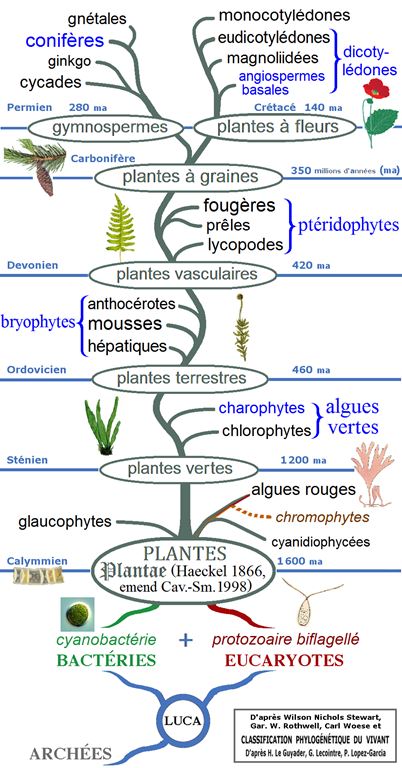
À droite, cet arbre phylogénétique des plantes montre les principaux clades et groupes traditionnels (monophylétiques en noir et paraphylétiques en bleu).
Dénominations
- Nom botanique : Cantharellus subalbidus A. H. Sm. & Morse
- Noms anglais et locaux : White chanterelle
Description et culture
Tableau récapitulatif
Parties comes-tibles Note comest. (1-5) Note medic. (1-5) (Zones de) Rusticité Besoins en 
Besoins en  (1-3)
(1-3)Périodes de semis et récoltes Graines au gramme Durée de viabilité Profon-deur semis Espace-ment plants Espace-ment lignes Durée germi-native Durée avant récolte J F M A M J
J A S O N D
J F M A M J
J A S O N D
- dont infos de 0FPI ("FOOD PLANTS INTERNATIONAL", en anglais) :
 Consommation (rapports de comestibilité, parties utilisables et usages alimentaires correspondants)
Consommation (rapports de comestibilité, parties utilisables et usages alimentaires correspondants)Parties comestibles :
champignon, légume{{{0(+x) (traduction automatique). Original : Mushroom, Fungus, Vegetable{{{0(+x).Détails :
Les organes de fructification sont mangés. Ils peuvent être marinés. Ils gèlent bien{{{0(+x) (traduction automatique).
Original : The fruiting bodies are eaten. They can be marinated. They freeze well{{{0(+x).
Partie testée :
champignon{{{0(+x) (traduction automatique). Original : Mushroom{{{0(+x) Risques et précautions à prendre
Risques et précautions à prendrenéant, inconnus ou indéterminés.
Autres infos
dont infos de 0FPI ("FOOD PLANTS INTERNATIONAL", en anglais) :
Statut :
Les champignons sont vendus sur les marchés au Népal{{{0(+x) (traduction automatique).
Original : Mushrooms are sold in markets in Nepal{{{0(+x).
Distribution :
Californie. Au Népal, il pousse dans les endroits humides des forêts mixtes{{{0(+x) (traduction automatique).
Original : California. In Nepal it grows in moist places in mixed forests{{{0(+x).
Localisation :
Asie, Canada, Chine, Himalaya, Népal, Amérique du Nord, USA{{{0(+x) (traduction automatique).
Original : Asia, Canada, China, Himalayas, Nepal, North America, USA{{{0(+x).
Liens, sources et/ou références
Liens :
/ ;Sources et/ou références :
bibliographie (liste des sources et/ou références de l'encyclopédie)
dont livres et bases de données : 0FPI ("FOOD PLANTS INTERNATIONAL", en anglais) ;
dont bibliographie/références de 0FPI ("FOOD PLANTS INTERNATIONAL", en anglais) :
Adhikari, M. K., 2014, Addition and correction to the knowledge on edibility of wild mushrooms in Nepal: a discussion. Bul. Dept. Pl. Res. N. 36, Nepal p 4 ; Boa, E. R., 2004, Wild edible fungi and their importance to people. FAO Non Wood Forest Products Booklet 17 ; Facciola, S., 1998, Cornucopia 2: a Source Book of Edible Plants. Kampong Publications, p 251 ; http://www.mykoweb.com/CAF/edible.html ; Joshi, K. and Joshi, A. R., 2008, Ethnobotanical Studies on Some Lower Plants of the Central Development Region, Nepal. Ethnobotanical Leaflets 12:832-40 ; Kaye, G.C., 1986, Wild and Exotic Mushroom Cultivation in North America ; Schneider, E., 2001, Vegetables from Amaranth to Zucchini: The essential reference. HarperCollins. p 169
Recherche de/pour :
- "Cantharellus subalbidus" sur Google (pages et
images) ;
IPNI ("International Plant Names Index", en anglais) ;
TPL ("The Plant List", en anglais) ;
GRIN ("Germplasm Resources Information Network", en anglais) ;
TROPICOS (en anglais) ;
Tela Botanica ;
Pl@ntNet ;
Pl@ntUse ;
"Plants For A Future" (en anglais) ;
"Useful Tropical Plants" (en anglais) ou
"Useful Temperate Plants" (en anglais) ;
- "Cantharellus subalbidus" sur Google (pages et
images) ;
IPNI ("International Plant Names Index", en anglais) ;
TPL ("The Plant List", en anglais) ;
GRIN ("Germplasm Resources Information Network", en anglais) ;
TROPICOS (en anglais) ;
Tela Botanica ;
Pl@ntNet ;
Pl@ntUse ;
"Plants For A Future" (en anglais) ;
"Useful Tropical Plants" (en anglais) ou
"Useful Temperate Plants" (en anglais) ;
Espèces du même genre (Cantharellus)
58 taxons
- Cantharellus addaiensis
- Cantharellus afrocibarius
- Cantharellus aurantiacus
- Cantharellus carbonarius
- Cantharellus cibarius (Girolle)
- Cantharellus cibrosius
- Cantharellus cinereus (Chanterelle cendrée)
- Cantharellus cinnabarinus
- Cantharellus clavatus
- Cantharellus congolensis
- Cantharellus conspicuus
- Cantharellus cyanescens
- Cantharellus cyanoxanthus
- Cantharellus defibulatus
- Cantharellus densifolius
- Cantharellus eucalyptorum
- Cantharellus floccosus
- Cantharellus floridulus
- Cantharellus formosus
- Cantharellus friesii (Girolle abricot)
- Cantharellus gracilis
- Cantharellus guineensis
- Cantharellus guyanensis
- Cantharellus humidicola
- Cantharellus ignicolor
- Cantharellus incarnatus
- Cantharellus infundibuliformis
- Cantharellus isabellinus
- Cantharellus leucocomus
- Cantharellus longisporus
- Cantharellus luteopunctatus
- Cantharellus microcibarius
- Cantharellus mikemboensis
- Cantharellus miniatescens
- Cantharellus minor
- Cantharellus minutissimus
- Cantharellus miomboensis
- Cantharellus odoratus
- Cantharellus platyphyllus
- Cantharellus pseudocibarius
- Cantharellus pseudofriesii
- Cantharellus pseudomiomboensis
- Cantharellus rhodophyllus
- Cantharellus ruber
- Cantharellus rufopunctatus
- Cantharellus solidus
- Cantharellus splendens
- Cantharellus spp.
- Cantharellus stramineus
- Cantharellus subcibarius
- ...
Espèces de la même famille (Cantharellaceae)
77 taxons
- Chanterelle cendrée
- Chanterelle en tubes
- Chanterelle grise
- Chanterelle jaune
- Chanterelle sinueuse
- Girolle
- Girolle abricot
- Trompette de la mort
- Afrocantharellus fistulosus
- Afrocantharellus platyphyllus
- Afrocantharellus splendens
- Afrocantharellus symoensii
- Aphroditeola olida
- Arrhenia spathulata
- Cantharellus addaiensis
- Cantharellus afrocibarius
- Cantharellus aurantiacus
- Cantharellus carbonarius
- Cantharellus cibarius (Girolle)
- Cantharellus cibrosius
- Cantharellus cinereus (Chanterelle cendrée)
- Cantharellus cinnabarinus
- Cantharellus clavatus
- Cantharellus congolensis
- Cantharellus conspicuus
- Cantharellus cyanescens
- Cantharellus cyanoxanthus
- Cantharellus defibulatus
- Cantharellus densifolius
- Cantharellus eucalyptorum
- Cantharellus floccosus
- Cantharellus floridulus
- Cantharellus formosus
- Cantharellus friesii (Girolle abricot)
- Cantharellus gracilis
- Cantharellus guineensis
- Cantharellus guyanensis
- Cantharellus humidicola
- Cantharellus ignicolor
- Cantharellus incarnatus
- Cantharellus infundibuliformis
- Cantharellus isabellinus
- Cantharellus leucocomus
- Cantharellus longisporus
- Cantharellus luteopunctatus
- Cantharellus microcibarius
- Cantharellus mikemboensis
- Cantharellus miniatescens
- Cantharellus minor
- Cantharellus minutissimus
- Cantharellus miomboensis
- Cantharellus odoratus
- Cantharellus platyphyllus
- Cantharellus pseudocibarius
- Cantharellus pseudofriesii
- Cantharellus pseudomiomboensis
- Cantharellus rhodophyllus
- Cantharellus ruber
- ...







 donne accès au menu
  - encyclopédies des plantes alimentaires ;
 - page de recherche - reconnaissance (identification) de plantes ;
 - page du calendrier lunaire et son générateur (au format PDF et JPG) ;
 - tableau récapitulatif ;
 - générateur de potées (soupes), avec estimation des apports nutrionnels et du coût;
 - générateur de codes QR ;
 - page des archives avec de nombreux documents sur différents thèmes complémentaires comme la botanique, les légumes,
les champignons, la cuisine, le bien-être ainsi que différents MOOC mais également des liens vers les archives de l'association ;
- page des archives avec de nombreux documents sur différents thèmes complémentaires comme la botanique, les légumes,
les champignons, la cuisine, le bien-être ainsi que différents MOOC mais également des liens vers les archives de l'association ;

 ou
ou
 permettant de passer du format standard à l'AMP (et vice-versa), lequel est simplifié et donc plus rapide.
 pour le fruit (et/ou les graines, la pulpe, etc...),
 pour les fleurs (et/ou pétales, calice...),
 pour les feuilles (et/ou la tige, les pousses...),
 pour les racines,
 pour le tronc (et/ou l'écorce, la sève...), et enfin
 pour les champignons,
puis les notes alimentaires et médicinales (de 1 à 5 étoiles), la rusticité (résistance au froid/gel)
et pour finir un résumé.
pour les champignons,
puis les notes alimentaires et médicinales (de 1 à 5 étoiles), la rusticité (résistance au froid/gel)
et pour finir un résumé. menant ici 🙂
 ,
,  et
et





 ,
,


 Encyclopédie(s)
 Recherche-Reconnaissance
 Tableau récapitulatif
 Codes QR
 Archives
 Calendrier(s) lunaire(s)
  Potées
 Re-naturation/naturalisation
 Affichettes, herbiers &
co.
Affichettes, herbiers &
co. menu
menu galerie