Buchanania obovata
Pas d'illustration
pour le moment 😕

Un petit arbre. Il atteint une hauteur de 4 à 10 m. Les jeunes branches sont légèrement velues. Il perd ses feuilles au cours de l'année. Les feuilles sont épaisses et co ... (traduction automatique)
→suite


Affich., herbiers & co.
Buchanania obovata

Un petit arbre. Il atteint une hauteur de 4 à 10 m. Les jeunes branches sont légèrement velues. Il perd ses feuilles au cours de l'année. Les feuilles sont épaisses et coriaces. Ils varient en forme m... (traduction automatique) →suite
Pas d'illustration
pour le moment 😕
Pas d'illustration
pour le moment 😕
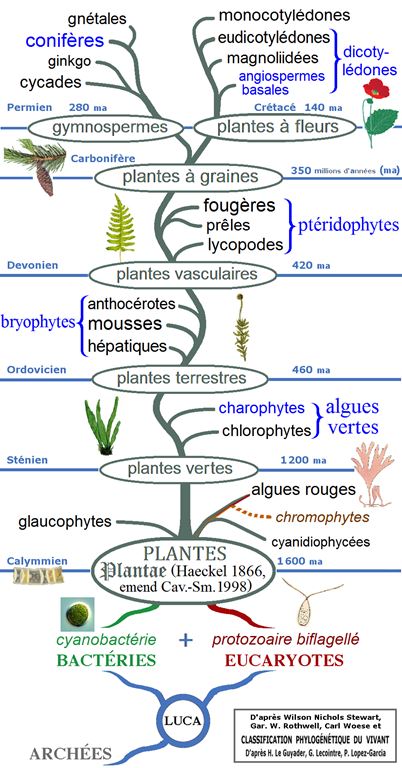
Classification
- Classique : en haut de l'écran, sous le coeur.
- Phylogénétique :
- Clade 4 : Angiospermes ;
- Clade 3 : Dicotylédones_vraies ;
- Clade 2 : Rosidées ;
- Clade 1 : Malvidées ;
- Ordre APN : Sapindales ;
- Famille APN : Anacardiaceae ;
À droite, cet arbre phylogénétique des plantes montre les principaux clades et groupes traditionnels (monophylétiques en noir et paraphylétiques en bleu).
Dénominations
- Nom botanique : Buchanania obovata Engl.
- Synonymes : Buchanania muelleri Engl, Buchanania muelleri var pilosa Engl, Buchanania oblongifolia W. Fitzg
- Noms anglais et locaux : Wild plum, Green plum
Description et culture
Tableau récapitulatif
Parties comes-tibles Note comest. (1-5) Note medic. (1-5) (Zones de) Rusticité Besoins en 
Besoins en  (1-3)
(1-3)Périodes de semis et récoltes Graines au gramme Durée de viabilité Profon-deur semis Espace-ment plants Espace-ment lignes Durée germi-native Durée avant récolte J F M A M J
J A S O N D
J F M A M J
J A S O N D
- dont infos de 0FPI ("FOOD PLANTS INTERNATIONAL", en anglais) :
Description :
Un petit arbre. Il atteint une hauteur de 4 à 10 m. Les jeunes branches sont légèrement velues. Il perd ses feuilles au cours de l'année. Les feuilles sont épaisses et coriaces. Ils varient en forme mais sont oblongs et effilés à la base. La lame mesure de 5 à 25 cm de long sur 1,5 à 10 cm de large. Ils sont d'un gris-vert terne et ont une nervure médiane surélevée proéminente. Les fleurs sont petites et crème. Ils mesurent environ 05 cm de diamètre. Ils se produisent en groupe à la fin des branches. Le fruit est un fruit lisse et charnu en forme de lentille avec une pierre à l'intérieur. Ils mesurent environ 1 à 1,7 cm de long sur 1 à 1,5 cm de large. Il y a une seule graine à coque dure. Les fruits sont comestibles{{{0(+x) (traduction automatique).
Original : A small tree. It grows 4-10 m high. The young branches are softly hairy. It loses its leaves during the year. The leaves are thick and leathery. They vary in shape but are oblong and taper to the base. The blade is 5-25 cm long by 1.5-10 cm wide. They are a dull grey-green and have a prominent raised midrib. The flowers are small and cream. They are about 05. cm across. They occur in a group at the end of branches. The fruit is a smooth fleshy lens-shaped fruit with a stone inside. They are about 1-1.7 cm long by 1-1.5 cm wide. There is a single hard shelled seed. The fruit are edible{{{0(+x).
Culture :
Les plantes sont cultivées à partir de graines fraîches. Il peut également être cultivé par boutures{{{0(+x) (traduction automatique).
Original : Plants are grown from fresh seed. It can also be grown by cuttings{{{0(+x).
 Consommation (rapports de comestibilité, parties utilisables et usages alimentaires correspondants)
Consommation (rapports de comestibilité, parties utilisables et usages alimentaires correspondants)Parties comestibles :
fruits, racines{{{0(+x) (traduction automatique). Original : Fruit, Roots{{{0(+x).Détails :
Les fruits sont consommés crus. Roots peuvent être consommés après avoir été rôtis et pilés{{{0(+x) (traduction automatique).
Original : The fruit are eaten raw. Roots may be eaten after roasting and pounding{{{0(+x).
Partie testée :
fruit{{{0(+x) (traduction automatique). Original : Fruit{{{0(+x)| Taux d'humidité (%) | Énergie (kj) | Énergie (kcal) | Protéines (g) |
|---|---|---|---|
| 77.8 | 318 | 76 | 1.5 |
| Pro- vitamines A (µg) |
Vitamines C (mg) | Fer (mg) | Zinc (mg) |
| 0 | 38 | 1.7 | 0.4 |
 Risques et précautions à prendre
Risques et précautions à prendrenéant, inconnus ou indéterminés.
Autres infos
dont infos de 0FPI ("FOOD PLANTS INTERNATIONAL", en anglais) :
Distribution :
C'est une plante tropicale. Un arbre de sous-étage en forêt ouverte. Il pousse sur des sols bien drainés. Il pousse souvent le long des ruisseaux dans les zones sèches. Il est très sensible au gel. Il pousse mieux dans les sols riches en humus et humides{{{0(+x) (traduction automatique).
Original : It is a tropical plant. An understorey tree in open forest. It grows on well-drained soils. It often grows along streams in dry areas. It is very frost sensitive. It grows best in humus rich, moist soils{{{0(+x).
Localisation :
Australie*{{{0(+x) (traduction automatique).
Original : Australia*{{{0(+x).
Notes :
Il existe environ 25 espèces de Buchanania{{{0(+x) (traduction automatique).
Original : There are about 25 Buchanania species{{{0(+x).
Liens, sources et/ou références
Liens :
/ ;Sources et/ou références :
bibliographie (liste des sources et/ou références de l'encyclopédie)
dont classification : IPNI ("International Plant Names Index", en anglais) ; Kew (POWO - "Plant Of the World Online", "Royal Botanical Garden", en anglais) ;
dont livres et bases de données : 0FPI ("FOOD PLANTS INTERNATIONAL", en anglais) ;
dont bibliographie/références de 0FPI ("FOOD PLANTS INTERNATIONAL", en anglais) :
Bindon, P., 1996, Useful Bush Plants. Western Australian Museum. p 60. ; Bodkin, F., 1991, Encyclopedia Botanica. Cornstalk publishing, p 174 ; Brock, J., 1993, Native Plants of Northern Australia, Reed. p 104 ; Checklist of NT Vascular Plant Species. January 2003. ; Cherikoff V. & Isaacs, J., The Bush Food Handbook. How to gather, grow, process and cook Australian Wild Foods. Ti Tree Press, Australia p 198 ; Crawford, I. M., 1982, Traditional Aboriginal Plant Resources in the Kalumburu Area: Aspects in Ethno-economics. Records of the Western Australian Museum Supplement No. 15 ; Cribb, A.B. & J.W., 1976, Wild Food in Australia, Fontana. p 24 ; Elliot, W.R., & Jones, D.L., 1982, Encyclopedia of Australian Plants suitable for cultivation. Vol 2. Lothian. p 385 ; Hiddins, L., 1999, Explore Wild Australia with the Bush Tucker Man. Penguin Books/ABC Books. p 144 ; Isaacs, J., 1987, Bush Food, Aboriginal Food and Herbal Medicine. Weldons. p 62 ; Kenneally, K.E., Edinger, D. C., and Willing T., 1996, Broome and Beyond, Plants and People of the Dampier Peninsula, Kimberley, Western Australia. Department of Conservation and Land Management. p 59 ; Lazarides, M. & Hince, B., 1993, Handbook of Economic Plants of Australia, CSIRO. p 40 ; Levitt, D., 1981, Plants and people. Aboriginal uses of plants on Groote Eylandt, Australian Institute of Aboriginal Studies, Canberra. p 80 ; Low, T., 1991, Wild Food Plants of Australia. Australian Nature FieldGuide, Angus & Robertson. p 150 ; Morley, B.D., & Toelken, H.R., (Eds), 1983, Flowering Plants in Australia. Rigby. p 190 ; Norrington, L., & Campbell, C., 2001, Tropical Food Gardens. Bloomings Books. p 89, 103 ; Paczkowska, G. & Chapman, A.R., 2000, The Western Australian Flora. A Descriptive Catalogue. Western Australian Herbarium. p 137 ; Petheram, R. J. and Kok, B., 2003, Plants of the Kimberley Region of Western Australia. UWA Press p 389 ; Smith, M & Kalotas, A. C., 1985, Bardi Plants: An Annotated List of Plants and Their Use by the Bardi Aborigines of Dampierland, in North-western Australia. Rec. West Aust. Mus. 1985, 12(3): 317-359 ; Smith, N and Wightman, G.M., 1990, Ethnobotanical Notes from Belyuen Northern Territory Australia. Northern Territory Botanical Bulletin No 10. Parks and Wildlife Commission of the Northern Territory. p7, 8. ; Smith, N. M., 1991, Ethnobotanical Field Notes from the Northern Territory, Australia, J. Adelaide Bot. Gard. 14(1): 1-65 ; Smith, Nicholas et al. 1993, Ngarinyman Ethnobotany: Aboriginal Plant Use from the Victoria River Area Northern Australia. Northern Territory Botanical Bulletin No 16. Parks and Wildlife Commission of the Northern Territory. p 12, 11. ; Vigilante, T., et al, 2013, Island country: Aboriginal connections, values and knowledge of the Western Kimberley islands in the context of an island biological survey. Records of the Western Australian Museum Supplement 81: 145-182 (As oblongifolia) ; Wheeler, J.R.(ed.), 1992, Flora of the Kimberley Region. CALM, Western Australian Herbarium, p 658 ; Wightman, Glenn et al. 1991. Alawa Ethnobotany: Aboriginal Plant Use from Minyerri, Northern Australia. Northern Territory Botanical Bulletin No 11. Parks and Wildlife Commission of the Northern Territory. p 6, 7. ; Wightman, G. & Andrews, M., 1991, Bush Tucker Identikit. Common Native Food Plants of Australiaâ's top end. Conservation Commission Northern Territory. p 6 ; Wightman, Glenn et al. 1992, Mangarrayi Ethnobotany: Aboriginal Plant Use from the Elsey Area Northern Australia. Northern Territory Botanical Bulletin No 15. Parks and Wildlife Commission of the Northern Territory. p 12, 11. ; Wightman, G. & Brown, J., 1994, Jawoyn Plant Identikit, Common Useful Plants in the Katherine Area of Northern Australia. Concervation Commission Northern Territory. p 16 ; Yunupinu Banjgul, Laklak Yunupinu-Marika, et al. 1995, Rirratjinu Ethnobotany: Aboriginal Plant Use from Yirrkala, Arnhem Land, Australia. Northern Territory Botanical Bulletin No 21. Parks and Wildlife Commission of the Northern Territory. p 24.
Recherche de/pour :
- "Buchanania obovata" sur Google (pages et
images) ;
TPL ("The Plant List", en anglais) ;
GRIN ("Germplasm Resources Information Network", en anglais) ;
TROPICOS (en anglais) ;
Tela Botanica ;
Pl@ntNet ;
Pl@ntUse ;
"Plants For A Future" (en anglais) ;
"Useful Tropical Plants" (en anglais) ou
"Useful Temperate Plants" (en anglais) ;
- "Buchanania obovata" sur Google (pages et
images) ;
TPL ("The Plant List", en anglais) ;
GRIN ("Germplasm Resources Information Network", en anglais) ;
TROPICOS (en anglais) ;
Tela Botanica ;
Pl@ntNet ;
Pl@ntUse ;
"Plants For A Future" (en anglais) ;
"Useful Tropical Plants" (en anglais) ou
"Useful Temperate Plants" (en anglais) ;
Espèces du même genre (Buchanania)
11 taxons
- Buchanania arborescens F.Muell.
- Buchanania axillaris (Desr.) Ramamoorthy
- Buchanania cochinchinensis (Lour.) M.R.Almeida
- Buchanania lanceolata Wight
- Buchanania lancifolia Roxb.
- Buchanania nitida Engl.
- Buchanania reticulata Elmer
- Buchanania sessilifolia
- Buchanania siamensis Miq.
- Buchanania splendens Miq.
Espèces de la même famille (Anacardiaceae)
322 taxons
- Anacardier
- Anacardier de l'Inde
- Anacardier géant
- Anacardier sauvage
- Baies à limonade (tp* de "lemonade berry")
- Binjai
- Faux-poivrier
- Faux-poivrier odorant
- Huigen
- Kemang
- Khinjuk
- Laitue d'eau
- Lapsi
- Manguier
- Manguier kalimantan
- Manguier parfumé
- Manguier pari
- Maprang
- Marula
- Noix de singes (tp* de "Monkey nut")
- Pistachier
- Pistachier de lAtlas
- Pistachier lentisque
- Pistachier térébinthe
- Pomme cythère
- Prune cafre
- Prunier espagnol
- Prunier mombin
- Raisin d'afrique
- Sambal
- Sumac
- Sumac à long pied
- Sumac à sucre (tp* de "sugar sumac")
- Sumac de virginie
- Sumac Fustet
- Sumac glabre
- Sumac hybride
- Umbu
- Allospondias sp.
- Amphipterygium adstringens (Schltdl.) Schiede ex Standl.
- Anacardium amapaense J.D.Mitch.
- Anacardium corymbosum Barb.Rodr.
- Anacardium excelsum (Bertero ex Kunth) Skeels (Anacardier sauvage)
- Anacardium fruticosum J.Mitch. & S.A.Mori
- Anacardium giganteum Hancock ex Engl. (Anacardier géant)
- Anacardium humile A.St.-Hil. (Noix de singes (tp* de "Monkey nut"))
- Anacardium macrocarpa Engler
- Anacardium microcarpum Ducke
- Anacardium microsepalum Loes.
- Anacardium nanum A.St.-Hil.
- Anacardium negrense Pires et Froes.
- Anacardium occidentale L. (Anacardier)
- Anacardium othonianum Rizzini
- Anacardium parvifolium Ducke
- Anacardium pumilum Walp.
- Anacardium spruceanum Benth. ex Engl.
- Antrocaryon amazonicum (Ducke) B.L.Burtt & A.W.Hill
- Antrocaryon klaineanum Pierre
- Antrocaryon micraster A.Chev. & Guillaumin
- Antrocaryon nannanii De Wild.
- Bouea macrophylla Griff. (Maprang)
- Bouea oppositifolia (Roxb.) Meisn.
- Buchanania arborescens F.Muell.
- Buchanania axillaris (Desr.) Ramamoorthy
- Buchanania cochinchinensis (Lour.) M.R.Almeida
- Buchanania lanceolata Wight
- Buchanania lancifolia Roxb.
- Buchanania nitida Engl.
- Buchanania reticulata Elmer
- Buchanania sessilifolia
- Buchanania siamensis Miq.
- Buchanania splendens Miq.
- Campnosperma oxyrachis
- Campnosperma panamense Standl.
- Choerospondias axillaris (Roxb.) B. L. Burtt & A. W. Hill (Lapsi)
- Comocladia mollissima Kunth
- Comocladia pinnatifolia L.
- Cotinus coggygria Scop. (Sumac Fustet)
- Cyrtocarpa edulis (Brandegee) Standl.
- Cyrtocarpa procera Kunth
- Dracontomelon costatum Blume
- Dracontomelon dao (Blanco) Merr. & Rolfe
- Dracontomelon duperreanum Pierre
- Dracontomelon lenticulatum H.P.Wilk.
- Dracontomelon macrocarpum H.L.Li
- Dracontomelon vitiense Engl.
- Euroschinus falcatus Hook.f.
- Fegimanra africana (Oliv.) Pierre
- ...







 donne accès au menu
  - encyclopédies des plantes alimentaires ;
 - page de recherche - reconnaissance (identification) de plantes ;
 - page du calendrier lunaire et son générateur (au format PDF et JPG) ;
 - tableau récapitulatif ;
 - générateur de potées (soupes), avec estimation des apports nutrionnels et du coût;
 - générateur de codes QR ;
 - page des archives avec de nombreux documents sur différents thèmes complémentaires comme la botanique, les légumes,
les champignons, la cuisine, le bien-être ainsi que différents MOOC mais également des liens vers les archives de l'association ;
- page des archives avec de nombreux documents sur différents thèmes complémentaires comme la botanique, les légumes,
les champignons, la cuisine, le bien-être ainsi que différents MOOC mais également des liens vers les archives de l'association ;

 ou
ou
 permettant de passer du format standard à l'AMP (et vice-versa), lequel est simplifié et donc plus rapide.
 pour le fruit (et/ou les graines, la pulpe, etc...),
 pour les fleurs (et/ou pétales, calice...),
 pour les feuilles (et/ou la tige, les pousses...),
 pour les racines,
 pour le tronc (et/ou l'écorce, la sève...), et enfin
 pour les champignons,
puis les notes alimentaires et médicinales (de 1 à 5 étoiles), la rusticité (résistance au froid/gel)
et pour finir un résumé.
pour les champignons,
puis les notes alimentaires et médicinales (de 1 à 5 étoiles), la rusticité (résistance au froid/gel)
et pour finir un résumé. menant ici 🙂
 ,
,  et
et





 ,
,


 Encyclopédie(s)
 Recherche-Reconnaissance
 Tableau récapitulatif
 Codes QR
 Archives
 Calendrier(s) lunaire(s)
  Potées
 Re-naturation/naturalisation
 Affichettes, herbiers &
co.
Affichettes, herbiers &
co. menu
menu galerie







 (en bas à gauche).
