Cléome
(Cleome viscosa)
 |
**
-
**
|
**
-
**
Une herbe annuelle dressée. C'est collant. Il a une odeur de rang et mesure environ 0,3 à 1 m de haut. Les feuilles sont constituées de 3 à 5 folioles de 1 à 3 cm chacune ... (traduction automatique)
→suite


Affich., herbiers & co.
Cléome
Une herbe annuelle dressée. C'est collant. Il a une odeur de rang et mesure environ 0,3 à 1 m de haut. Les feuilles sont constituées de 3 à 5 folioles de 1 à 3 cm chacune. Les fleurs sont en groupes f... (traduction automatique) →suite
Note alimentaire  médicinale

Pas d'illustration
pour le moment 😕
Cleome viscosa
Classification
- Classique : en haut de l'écran, sous le coeur.
- Phylogénétique :
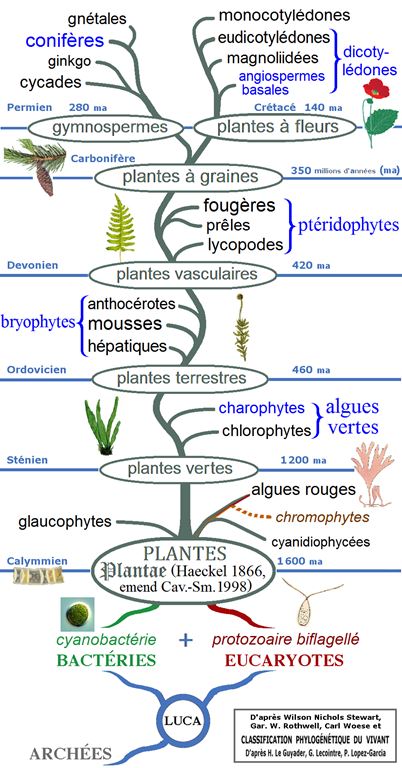
- Clade 4 : Angiospermes ;
- Clade 3 : Dicotylédones_vraies ;
- Clade 2 : Rosidées ;
- Clade 1 : Malvidées ;
- Ordre APN : Brassicales ;
- Famille APN : Cleomaceae ;
À droite, cet arbre phylogénétique des plantes montre les principaux clades et groupes traditionnels (monophylétiques en noir et paraphylétiques en bleu).
Dénominations
- Nom botanique : Cleome viscosa L.
- Synonymes : Arivela viscosa (L.) Raf, Cleome acutifolia Elmer, Cleome icosandra L, Polanisia icosandra (L.f.) Wight & Arn, Polanisia viscosa (L.) DC, Sinapistrum viscosum (L.) Moench
- Noms anglais et locaux : Sticky Cleome, Asian spiderflower
Description et culture
Tableau récapitulatif
Parties comes-tibles Note comest. (1-5) Note medic. (1-5) (Zones de) Rusticité Besoins en 
Besoins en  (1-3)
(1-3)Périodes de semis et récoltes Graines au gramme Durée de viabilité Profon-deur semis Espace-ment plants Espace-ment lignes Durée germi-native Durée avant récolte Zones de rusticité : J F M A M J
J A S O N D
J F M A M J
J A S O N D
- dont infos de 0FPI ("FOOD PLANTS INTERNATIONAL", en anglais) :
Description :
Une herbe annuelle dressée. C'est collant. Il a une odeur de rang et mesure environ 0,3 à 1 m de haut. Les feuilles sont constituées de 3 à 5 folioles de 1 à 3 cm chacune. Les fleurs sont en groupes feuillus au bout des branches. Les pousses fleuries mesurent 5 à 10 cm de long. Les tiges des fleurs mesurent moins de 1 cm de long. Les pétales sont jaunes et mesurent 7 à 8 mm de long. Le fruit est une capsule de 3 à 10 cm de long sur 2 à 4 mm de large. Il a des crêtes le long de celui-ci. Il se divise en partie. C'est étroit. Il se rétrécit et se rétrécit progressivement près de la pointe. Les tiges et les gousses sont velues. Les graines sont rondes, noires et de 1 mm de diamètre. Il y a 25 à 40 graines. Ils sont brun clair et mesurent 1,2-1,8 mm de long sur 1-1,2 mm de large. Ils ont de fines crêtes{{{0(+x) (traduction automatique).
Original : An erect annual herb. It is sticky. It has a rank smell and is about 0.3 to 1 m high. The leaves are made up of 3 to 5 leaflets each 1 to 3 cm long. The flowers are in leafy groups at the end of branches. The flowering shoots are 5-10 cm long. The flower stalks are less than 1 cm long. The petals are yellow and 7 to 8 mm long. The fruit is a capsule 3-10 cm long by 2-4 mm wide. It has ridges along it. It partly splits open. It is narrow. It narrows and gradually tapers near the tip. The stems and seed pods are hairy. The seeds are round, black and 1 mm across. There are 25-40 seeds. They are light brown and 1.2-1.8 mm long by 1-1.2 mm wide. They have fine ridges{{{0(+x).
Production :
En Chine, les plantes fleurissent de juillet à septembre et fructifient en octobre{{{0(+x) (traduction automatique).
Original : In China plants flower July to September and fruit in October{{{0(+x).
Culture :
Les plantes sont cultivées à partir de graines{{{0(+x) (traduction automatique).
Original : Plants are grown from seed{{{0(+x).
Consommation (rapports de comestibilité, parties utilisables et usages alimentaires correspondants)
Consommation (rapports de comestibilité, parties utilisables et usages alimentaires correspondants)Parties comestibles :
feuilles, fruits, graines, huile, légumes, épices{{{0(+x) (traduction automatique). Original : Leaves, Fruit, Seeds, Oil, Vegetable, Spice{{{0(+x).Détails :
Les feuilles sont comestibles cuites. Les jeunes fruits sont consommés confits. Les graines torréfiées sont utilisées dans les currys et les cornichons. L'huile de semence est utilisée pour la cuisson. Les graines sont séchées et moulues et utilisées comme légume. Les feuilles sont trempées, fermentées et utilisées comme épice{{{0(+x) (traduction automatique).
Original : The leaves are edible cooked.The young fruit are eaten candied. Roasted seeds are used in curries and pickles.Seed oil is used for cooking. The seeds are dried and ground and used as a vegetable. The leaves are soaked, fermented and used as a spice{{{0(+x).
Partie testée :
feuilles{{{0(+x) (traduction automatique). Original : Leaves{{{0(+x)| Taux d'humidité (%) | Énergie (kj) | Énergie (kcal) | Protéines (g) |
|---|---|---|---|
| 80.4 | 0 | 0 | 5.6 |
| Pro- vitamines A (µg) |
Vitamines C (mg) | Fer (mg) | Zinc (mg) |
| 0 | 0 | 24 | 0 |
 Risques et précautions à prendre
Risques et précautions à prendrenéant, inconnus ou indéterminés.
Autres infos
dont infos de 0FPI ("FOOD PLANTS INTERNATIONAL", en anglais) :
Statut :
C'est un légume-feuille mineur mais qui devient de plus en plus populaire comme condiment de graines{{{0(+x) (traduction automatique).
Original : It is a minor leaf vegetable but becoming more popular as a seed condiment{{{0(+x).
Distribution :
C'est une plante tropicale. On les trouve dans des décharges à basse et moyenne altitude à travers les Philippines. Au Népal, il pousse jusqu'à 1200 m d'altitude. Il est endommagé par la sécheresse et le gel. Il pousse dans les zones humides. Il peut pousser dans des endroits arides. Il limite la germination et la croissance du mil chandelle. Dans le centre de la Chine, il passe du niveau de la mer à 300 m au-dessus du niveau de la mer. Au Yunnan{{{0(+x) (traduction automatique).
Original : It is a tropical plant. They are found in waste places at low and medium altitudes throughout the Philippines. In Nepal it grows up to 1200 m altitude. It is damaged by drought and frost. It grows in wetlands. It can grow in arid places. It restricts the germination and growth of Pearl millet. In central China it grows from sea level to 300 m above sea level. In Yunnan{{{0(+x).
Localisation :
Afghanistan, Afrique, Antigua-Barbuda, Asie, Australie, Barbade, Belize, Bénin, Bermudes, Bhoutan, Brésil, Burkina Faso, Cambodge, Cameroun, Cap-Vert, Afrique centrale, Amérique centrale, Tchad, Chine, Comores, Côte Ivoire, Cuba, Dominique, République dominicaine, Afrique de l'Est, Timor oriental, Égypte, El Salvador, Éthiopie, Fidji, Gambie, Ghana, Grenade, Guadeloupe, Guatemala, Guinée, Guinée, Guinée-Bissau, Haïti, Himalaya, Honduras , Inde, Indochine, Indonésie, Irak, Côte d'Ivoire, Jamaïque, Japon, Laos, Liberia, Madagascar, Malaisie, Maldives, Mali, Marquises, Martinique, Mauritanie, Maurice, Mexique, Myanmar, Nauru, Népal, Nicaragua, Niger, Nigéria, Afrique du Nord, Amérique du Nord, Inde du Nord-Est, Pacifique, Pakistan, Papouasie-Nouvelle-Guinée, PNG, Philippines, Porto Rico, Samoa, Arabie Saoudite, Asie du Sud-Est, Sénégal, Seychelles, Sierra Leone, Socotra, Amérique du Sud,Sri Lanka, Soudan, Taiwan, Tanzanie, Thaïlande, Timor-Leste, Togo, Trinité-Tobago, Tuvalu, Vietnam, Iles Vierges, Afrique de l'Ouest, Antilles, Yémen{{{0(+x) (traduction automatique).
Original : Afghanistan, Africa, Antigua-Barbuda, Asia, Australia, Barbados, Belize, Benin, Bermuda, Bhutan, Brazil, Burkina Faso, Cambodia, Cameroon, Cape Verde, Central Africa, Central America, Chad, China, Comoros, Côte d'Ivoire, Cuba, Dominica, Dominican Republic, East Africa, East Timor, Egypt, El Salvador, Ethiopia, Fiji, Gambia, Ghana, Grenada, Guadeloupe, Guatemala, Guinea, Guinée, Guinea-Bissau, Haiti, Himalayas, Honduras, India, Indochina, Indonesia, Iraq, Ivory Coast, Jamaica, Japan, Laos, Liberia, Madagascar, Malaysia, Maldives, Mali, Marquesas, Martinique, Mauritania, Mauritius, Mexico, Myanmar, Nauru, Nepal, Nicaragua, Niger, Nigeria, North Africa, North America, Northeastern India, Pacific, Pakistan, Papua New Guinea, PNG, Philippines, Puerto Rico, Samoa, Saudi Arabia, SE Asia, Senegal, Seychelles, Sierra Leone, Socotra, South America, Sri Lanka, Sudan, Taiwan, Tanzania, Thailand, Timor-Leste, Togo, Trinidad-Tobago, Tuvalu, Vietnam, Virgin Islands, West Africa, West Indies, Yemen{{{0(+x).
Notes :
Il existe environ 150 espèces de Cleome. Composition chimique (pour 100g) (feuilles, crues): Protéine = 5,5g. Lipides = 0,9 g. Calcium - 454 mg. Fer = 2,7 mg. Kcal = 57. Les graines sont riches en huile (26%). Ils sont également utilisés en médecine{{{0(+x) (traduction automatique).
Original : There are about 150 Cleome species. Chemical composition (per 100g) (leaves, raw): Protein = 5.5g. Fat = .9g. Calcium - 454 mg. Iron = 2.7 mg. Kcal = 57. The seeds are rich in oil (26%). They are also used in medicine{{{0(+x).
Rusticité (résistance face au froid/gel, climat)
Zones de rusticité :
Liens, sources et/ou références
Liens :
/ ;Sources et/ou références :
bibliographie (liste des sources et/ou références de l'encyclopédie)
dont classification : IPNI ("International Plant Names Index", en anglais) ; Kew (POWO - "Plant Of the World Online", "Royal Botanical Garden", en anglais) ; Tela Botanica ;
dont livres et bases de données : 5PFAF ("Plants For A Future", en anglais) ; 0FPI ("FOOD PLANTS INTERNATIONAL", en anglais) ;
dont bibliographie/références de 0FPI ("FOOD PLANTS INTERNATIONAL", en anglais) :
BERRY-KOCH, ; Bodkin, F., 1991, Encyclopedia Botanica. Cornstalk publishing, p 265 ; Burkill, H. M., 1985, The useful plants of west tropical Africa, Vol. 1. Kew. ; Codjia, J. T. C., et al, 2003, Diversity and local valorisation of vegetal edible products in Benin. Cahiers Agricultures 12:1-12 ; Cooper, W. and Cooper, W., 2004, Fruits of the Australian Tropical Rainforest. Nokomis Editions, Victoria, Australia. p 111 ; Cowie, I, 2006, A Survey of Flora and vegetation of the proposed Jaco-Tutuala-Lore National Park. Timor-Lests (East Timor) www.territorystories.nt/gov.au p 45 ; Cronin, L., 1989, The Concise Australian Flora. Reed. p 78 ; Dalziel, J. M., 1937, The Useful plants of west tropical Africa. Crown Agents for the Colonies London. ; Dangol, D. R. et al, 2017, Wild Edible Plants in Nepal. Proceedings of 2nd National Workshop on CUAOGR, 2017. ; Dey, A. & Mukhererjee, A., 2015, Living and Survival Amidst Hunger: Wild Edible Botanicals as a Prime Forest Productivity in the Rural Purulia District, West Bengal, India from Colonial to Present. Research Journal of Forestry 9(3): 71-86 ; Dhyani, S.K., & Sharma, R.V., 1987, Exploration of Socio-economic plant resources of Vyasi Valley in Tehri Garwhal. J. Econ. Tax. Bot. Vol. 9 No. 2 pp 299-310 ; Dobriyal, M. J. R. & Dobriyal, R., 2014, Non Wood Forest Produce an Option for Ethnic Food and Nutritional Security in India. Int. J. of Usuf. Mngt. 15(1):17-37 ; Elliot, W.R., & Jones, D.L., 1984, Encyclopedia of Australian Plants suitable for cultivation. Vol 3. Lothian. p 48 ; Facciola, S., 1998, Cornucopia 2: a Source Book of Edible Plants. Kampong Publications, p 78 ; Flora of Australia, Volume 8, Lecythidales to Batales, Australian Government Publishing Service, Canberra (1982) p 224 ; Flora of China. www.eFloras.org (As Arivela viscosa) ; Flora of Pakistan. www.eFlora.org ; Gallagher, D. E., 2010, Farming beyond the escarpment: Society, Environment, and Mobility in Precolonial Southeastern Burkina Faso. PhD University of Michigan. ; GAMMIE, ; Grubben, G. J. H. and Denton, O. A. (eds), 2004, Plant Resources of Tropical Africa 2. Vegetables. PROTA, Wageningen, Netherlands. p 198 ; GUPTA & KANODIA, ; Hedrick, U.P., 1919, (Ed.), Sturtevant's edible plants of the world. p 204 ; Jadhav, R., et al, 2015, Forest Foods of Northern Western Ghats: Mode of Consumption, Nutrition and Availability. Asian Agri-History Vol. 19, No. 4: 293-317 ; Joshi, N., et al, 2007, Traditional neglected vegetables of Nepal: Their sustainable utilization for meeting human needs. Tropentag 2007. Conference on International Agricultural Research for Development. ; Joshi, N. & Siwakoti, M., 2012, Wild Vegetables Used by Local Community of Makawanpur District and Their Contribution to Food Security and Income Generation. Nepal Journal of Science and Technology Vol. 13, No. 1 (2012) 59-66 ; Kenneally, K.E., Edinger, D. C., and Willing T., 1996, Broome and Beyond, Plants and People of the Dampier Peninsula, Kimberley, Western Australia. Department of Conservation and Land Management. p 82 ; Kermath, B. M., et al, 2014, Food Plants in the Americas: A survey of the domesticated, cultivated and wild plants used for Human food in North, Central and South America and the Caribbean. On line draft. p 243 ; Lazarides, M. & Hince, B., 1993, Handbook of Economic Plants of Australia, CSIRO. p 61 ; Levitt, D., 1981, Plants and people. Aboriginal uses of plants on Groote Eylandt. Australian Institute of Aboriginal Studies, Canberra. p 88 ; Manandhar, N.P., 2002, Plants and People of Nepal. Timber Press. Portland, Oregon. p 159 ; Marandi, R. R. & Britto, S. J., 2015, Medicinal Properties of Edible Weeds of Crop Fields and Wild plants Eaten by Oraon Tribals of Latehar District, Jharkhand. International Journal of Life Science and Pharma Research. Vo. 5. (2) April 2015 ; Martin, F.W. & Ruberte, R.M., 1979, Edible Leaves of the Tropics. Antillian College Press, Mayaguez, Puerto Rico. p 181 ; McMakin, P.D., 2000, Flowering Plants of Thailand. A Field Guide. White Lotus. p 89 ; Mehta, P. S. et al, 2010, Native plant genetic resources and traditional foods of Uttarakhand Himalaya for sustainable food security and livelihood. Indian Journal or Natural products and Resources. Vol 1(1), March 2010 pp 89-96 ; Mertz, O., Lykke, A. M., and Reenberg, A., 2001, Importance and Seasonality of Vegetable Consumption and Marketing in Burkina Faso. Economic Botany, 55(2):276-289 ; Monsalud, M.R., Tongacan, A.L., Lopez, F.R., & Lagrimas, M.Q., 1966, Edible Wild Plants in Philippine Forests. Philippine Journal of Science. p 450 ; Morley, B.D., & Toelken, H.R., (Eds), 1983, Flowering Plants in Australia. Rigby. p 102 ; Narayanan Ratheesh, M. K. et al, 2011, Wild edible plants used by the Kattunaikka, Paniya and Kuruma tribes of Wayanad District, Kerala, India. Journal of Medicinal Plants Research Vol. 5(15), pp. 3520-3529 ; Paczkowska, G. & Chapman, A.R., 2000, The Western Australian Flora. A Descriptive Catalogue. Western Australian Herbarium. p 195 ; Pagag, K. & Borthakur, S.K., 2012, Wild edible wetland plants from Lakhimpur district of Assam, India. Pleione 6(2): 322 - 327 ; Peters, C. R., O'Brien, E. M., and Drummond, R.B., 1992, Edible Wild plants of Sub-saharan Africa. Kew. p 77 ; Petheram, R.J. and Kok, B., 2003, Plants of the Kimberley Region of Western Australia. UWA Press p 91 ; Pham-Hoang Ho, 1999, An Illustrated Flora of Vietnam. Nha Xuat Ban Tre. p 598 ; Phon, P., 2000, Plants used in Cambodia. © Pauline Dy Phon, Phnom Penh, Cambodia. p 163 ; Plants for a Future database, The Field, Penpol, Lostwithiel, Cornwall, PL22 0NG, UK. http://www.scs.leeds.ac.uk/pfaf/ ; Plants of Haiti Smithsonian Institute http://botany.si.edu/antilles/West Indies ; Radha, B., et al, 2013, Wild Edible Plant Resources of the Lohba Range of Kedarnath Forest Division (KFD), Garhwal Himalaya, India. Int. Res J. Biological Sci. Vol. 2 (11), 65-73 ; Royal Botanic Gardens, Kew (1999). Survey of Economic Plants for Arid and Semi-Arid Lands (SEPASAL) database. Published on the Internet; http://www.rbgkew.org.uk/ceb/sepasal/internet [Accessed 7th April 2011] ; Sang, D. T., & Mizoue, K. O. N., 2012, Use of Edible Forest Plants among Indigenous Ethnic Minorities in Cat Tien Biosphere Reserve, Vietnam. Asian Journal of Biodiversity Vol. 3 (1), p 23-49 ; SAXENA, ; SHANKARNARAYAN & SAXENA, ; Sinha, R. & Lakra, V., 2007, Edible weeds of tribals in Jharkhand, Orissa and West Bengal. Indian Journal of Traditional Knowledge 6(1) January 2007 pp 217-222 ; Smith, A.C., 1981, Flora Vitiensis Nova, Lawaii, Kuai, Hawaii, Volume 2 p 700 ; Sp. pl. 2:672. 1753 ; Sujanapal, P., & Sankaran, K. V., 2016, Common Plants of Maldives. FAO & Kerala FRI, p 88 ; Sukenti, K., et al, 2016, Ethnobotanical study on local cuisine of the Sasak tribe in Lombok Island, Indonesia. Journal of Ethnic Foods. 3 (2016) 189-200 p 198 ; Tewari, D.N., 1994, Important Plants of India. International Book Distributors, India. p 111 ; Thaman, R. R, 2016, The flora of Tuvalu. Atoll Research Bulletin No. 611. Smithsonian Institute p 75 ; Uprety, Y., et al, 2011, Plant biodiversity and ethnobotany inside the projected impact area of the Upper Seti Hydropower Project, Western Nepal. Environ. Dev. Sustain. (2011) 13:463-492 ; Uprety, Y., et al, 2012, Diversity of use and local knowledge of wild edible plant resources in Nepal. Journal of Ethnobotany and Ethnomedicine 8:16 ; WATT, ; Wheeler, J.R.(ed.), 1992, Flora of the Kimberley Region. CALM, Western Australian Herbarium, p 262
Recherche de/pour :
- "Cleome viscosa" sur Google (pages et
images) ;
TPL ("The Plant List", en anglais) ;
GRIN ("Germplasm Resources Information Network", en anglais) ;
TROPICOS (en anglais) ;
Pl@ntNet ;
Pl@ntUse ;
"Useful Tropical Plants" (en anglais) ou
"Useful Temperate Plants" (en anglais) ;
- "Cléome" sur Google (pages, images et recettes) ;
- "Cleome viscosa" sur Google (pages et
images) ;
TPL ("The Plant List", en anglais) ;
GRIN ("Germplasm Resources Information Network", en anglais) ;
TROPICOS (en anglais) ;
Pl@ntNet ;
Pl@ntUse ;
"Useful Tropical Plants" (en anglais) ou
"Useful Temperate Plants" (en anglais) ;
Espèces du même genre (Cleome)
27 taxons
- Cleome afrospinosa
- Cleome allamanii Chiov.
- Cleome amblyocarpa Barratte & Murb. (Cléome)
- Cleome arabica L.
- Cleome brachycarpa Vahl ex DC.
- Cleome briquetii Polhill
- Cleome chelidonii L.f.
- Cleome felina L.f.
- Cleome gallaensis Gilg & Gilg-Ben.
- Cleome gynandra L.
- Cleome hanburyana Penz.
- Cleome hirta (Klotzsch) Oliv.
- Cleome iberidella Welw. ex Oliv.
- Cleome icosandra L.
- Cleome isomeris Greene
- Cleome lutea Hook.
- Cleome macrophylla (Klotzsch) Briq.
- Cleome maculata (Sond.) Szyszy?.
- Cleome monophylla L.
- Cleome ornithopodioides L.
- Cleome rutidosperma DC.
- Cleome schimperi Pax
- Cleome serrulata Pursh
- Cleome spinosa Jacq. (Cléome épineux)
- Cleome strigosa (Bojer) Oliv.
- Cleome usambarica Pax
Espèces de la même famille (Capparaceae)
173 taxons
- Câprier
- Câprier d'Égypte
- Câprier de Sicile
- Câprier des rochers
- Câprier lanigère
- Cléome
- Cléome épineux
- Mozambé
- Oubli
- Anisocapparis speciosa
- Apophyllum anomalum F.Muell.
- Boscia albitrunca (Burch.) Gilg & Gilg-Ben.
- Boscia angustifolia A.Rich.
- Boscia coriacea Graells
- Boscia foetida Schinz
- Boscia longifolia Hadj-Moust.
- Boscia madagascariensis
- Boscia mazzocchii (Chiov.) Fici & Kers
- Boscia microphylla Oliv.
- Boscia minimifolia Chiov.
- Boscia mossambicensis Klotzsch
- Boscia oleoides (Burch. ex DC.) Toelken
- Boscia parviflora
- Boscia pechuelii Kuntze
- Boscia praecox Hauman
- Boscia salicifolia Oliv.
- Boscia senegalensis Hochst. ex Walp.
- Buchholzia coriacea Engl.
- Buchholzia tholloniana Hua
- Cadaba benguellensis Mendes
- Cadaba farinosa Forssk.
- Cadaba fruticosa (L.) Druce
- Cadaba kirkii Oliv.
- Cadaba stenopoda Gilg & Gilg-Ben.
- Capparicordis tweediana
- Capparidastrum coimbranum
- Capparidastrum osmanthum
- Capparidastrum petiolare
- Capparidastrum quinum
- Capparis aegyptia Lam. (Câprier d'Égypte)
- Capparis arborea (F.Muell.) Maiden
- Capparis assamica Hook.f. & Thomson
- Capparis atlantica Inocencio, D.Rivera, Obn & Alcaraz
- Capparis avicennifolia
- Capparis brevispina DC.
- Capparis buwaldae M.Jacobs
- Capparis canescens G.Don
- Capparis cartilaginea Decne.
- Capparis chingiana B.S.Sun
- Capparis cleghornii Dunn
- Capparis corymbosa Roxb.
- Capparis cynophallophora L.
- Capparis decidua (Forssk.) Edgew.
- Capparis divaricata Lam.
- Capparis erythrocarpus
- Capparis fascicularis DC.
- Capparis flavicans Kurz
- Capparis flexuosa Vell.
- Capparis grandiflora Wall. ex Hook.f. & Thomson
- ...







 donne accès au menu
  - encyclopédies des plantes alimentaires ;
 - page de recherche - reconnaissance (identification) de plantes ;
 - page du calendrier lunaire et son générateur (au format PDF et JPG) ;
 - tableau récapitulatif ;
 - générateur de potées (soupes), avec estimation des apports nutrionnels et du coût;
 - générateur de codes QR ;
 - page des archives avec de nombreux documents sur différents thèmes complémentaires comme la botanique, les légumes,
les champignons, la cuisine, le bien-être ainsi que différents MOOC mais également des liens vers les archives de l'association ;
- page des archives avec de nombreux documents sur différents thèmes complémentaires comme la botanique, les légumes,
les champignons, la cuisine, le bien-être ainsi que différents MOOC mais également des liens vers les archives de l'association ;

 ou
ou
 permettant de passer du format standard à l'AMP (et vice-versa), lequel est simplifié et donc plus rapide.
 pour le fruit (et/ou les graines, la pulpe, etc...),
 pour les fleurs (et/ou pétales, calice...),
 pour les feuilles (et/ou la tige, les pousses...),
 pour les racines,
 pour le tronc (et/ou l'écorce, la sève...), et enfin
 pour les champignons,
puis les notes alimentaires et médicinales (de 1 à 5 étoiles), la rusticité (résistance au froid/gel)
et pour finir un résumé.
pour les champignons,
puis les notes alimentaires et médicinales (de 1 à 5 étoiles), la rusticité (résistance au froid/gel)
et pour finir un résumé. menant ici 🙂
 ,
,  et
et





 ,
,


 Encyclopédie(s)
 Recherche-Reconnaissance
 Tableau récapitulatif
 Codes QR
 Archives
 Calendrier(s) lunaire(s)
  Potées
 Re-naturation/naturalisation
 Affichettes, herbiers &
co.
Affichettes, herbiers &
co. menu
menu galerie