Capparis lasiantha
Pas d'illustration
pour le moment 😕

Un petit arbuste. Il atteint 1 à 2 m de haut. Il se bouscule sur d'autres plantes. Les tiges sont en forme de zigzag. Il y a une paire d'épines incurvées vers l'arrière à ... (traduction automatique)
→suite


Affich., herbiers & co.
Capparis lasiantha

Un petit arbuste. Il atteint 1 à 2 m de haut. Il se bouscule sur d'autres plantes. Les tiges sont en forme de zigzag. Il y a une paire d'épines incurvées vers l'arrière à chaque angle le long de la ti... (traduction automatique) →suite
Pas d'illustration
pour le moment 😕
Pas d'illustration
pour le moment 😕
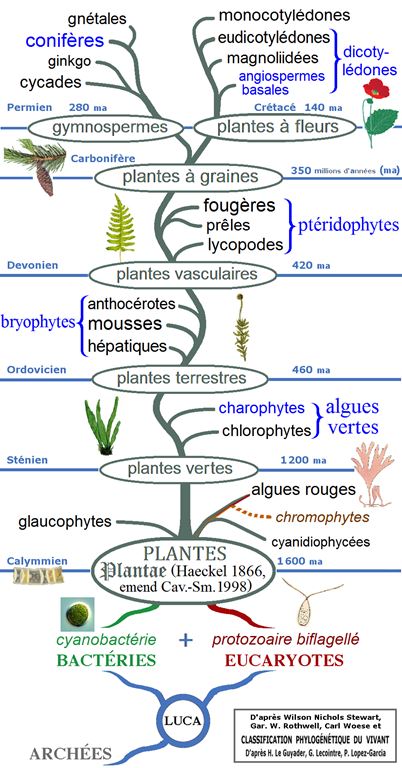
Classification
- Classique : en haut de l'écran, sous le coeur.
- Phylogénétique :
- Clade 4 : Angiospermes ;
- Clade 3 : Dicotylédones_vraies ;
- Clade 2 : Rosidées ;
- Clade 1 : Malvidées ;
- Ordre APN : Brassicales ;
- Famille APN : Capparaceae ;
À droite, cet arbre phylogénétique des plantes montre les principaux clades et groupes traditionnels (monophylétiques en noir et paraphylétiques en bleu).
Dénominations
- Nom botanique : Capparis lasiantha R.Br. ex DC.
- Synonymes : Capparis lasiantha var. citricarpa Domin, Capparis lasiantha var. normalis, Capparis lasiantha var. rhombifolia Domin
- Noms anglais et locaux : Bush Caper
Description et culture
Tableau récapitulatif
Parties comes-tibles Note comest. (1-5) Note medic. (1-5) (Zones de) Rusticité Besoins en 
Besoins en  (1-3)
(1-3)Périodes de semis et récoltes Graines au gramme Durée de viabilité Profon-deur semis Espace-ment plants Espace-ment lignes Durée germi-native Durée avant récolte J F M A M J
J A S O N D
J F M A M J
J A S O N D
- dont infos de 0FPI ("FOOD PLANTS INTERNATIONAL", en anglais) :
Description :
Un petit arbuste. Il atteint 1 à 2 m de haut. Il se bouscule sur d'autres plantes. Les tiges sont en forme de zigzag. Il y a une paire d'épines incurvées vers l'arrière à chaque angle le long de la tige. Les feuilles sont oblongues et émoussées. Ils sont épais et coriaces. Ils mesurent 2 à 5 cm de long sur 1 à 1,5 cm de large. Les fleurs sont blanches ou crème et moelleuses. Les fleurs mesurent 1,5 à 2 cm de diamètre. Ils se produisent seuls ou par paires à l'aisselle des feuilles. Ils ont une odeur douce. Le fruit est une baie orange de 3-4 cm de long. Il est de forme ovale et contient de nombreuses graines. C'est comestible{{{0(+x) (traduction automatique).
Original : A small shrub. It grows 1-2 m tall. It scrambles over other plants. The stems are zigzag in shape. There are a pair of backward curving spines at each angle along the stem. The leaves are oblong and blunt. They are thick and leathery. They are 2-5 cm long by 1-1.5 cm wide. The flowers are white or cream and fluffy. The flowers are 1.5-2 cm across. The occur either singly or in pairs in the axils of leaves. They have a sweet smell. The fruit is an orange berry 3-4 cm long. It is oval shaped and contains many seeds. It is edible{{{0(+x).
Culture :
Les plantes peuvent être cultivées à partir de graines ou de boutures{{{0(+x) (traduction automatique).
Original : Plants can be grown from seed or cuttings{{{0(+x).
 Consommation (rapports de comestibilité, parties utilisables et usages alimentaires correspondants)
Consommation (rapports de comestibilité, parties utilisables et usages alimentaires correspondants)Parties comestibles :
fruits, fleurs{{{0(+x) (traduction automatique). Original : Fruit, Flowers{{{0(+x).Partie testée :
fruit{{{0(+x) (traduction automatique). Original : Fruit{{{0(+x)| Taux d'humidité (%) | Énergie (kj) | Énergie (kcal) | Protéines (g) |
|---|---|---|---|
| 54.1 | 655 | 157 | 10.1 |
| Pro- vitamines A (µg) |
Vitamines C (mg) | Fer (mg) | Zinc (mg) |
| 0 | 6 | 1.2 | 0.9 |
 Risques et précautions à prendre
Risques et précautions à prendrenéant, inconnus ou indéterminés.
Autres infos
dont infos de 0FPI ("FOOD PLANTS INTERNATIONAL", en anglais) :
Distribution :
Une plante tropicale. Il pousse dans les régions intérieures de l'Australie. Il est très résistant à la sécheresse. Il peut également pousser dans la forêt de mousson. Dans le Queensland tropical, il passe du niveau de la mer à 600 m d'altitude. Il peut pousser dans des endroits arides{{{0(+x) (traduction automatique).
Original : A tropical plant. It grows in inland areas in Australia. It is very drought resistant. It can also grow in monsoon forest. In tropical Queensland it grows from sea level to 600 m altitude. It can grow in arid places{{{0(+x).
Localisation :
Australie*{{{0(+x) (traduction automatique).
Original : Australia*{{{0(+x).
Notes :
Il existe environ 250 espèces de Capparis. Il existe environ 50 espèces de Capparis en Amérique tropicale{{{0(+x) (traduction automatique).
Original : There are about 250 Capparis species. There are about 50 Capparis species in tropical America{{{0(+x).
Liens, sources et/ou références
Liens :
/ ;Sources et/ou références :
bibliographie (liste des sources et/ou références de l'encyclopédie)
dont classification : IPNI ("International Plant Names Index", en anglais) ; Kew (POWO - "Plant Of the World Online", "Royal Botanical Garden", en anglais) ;
dont livres et bases de données : 0FPI ("FOOD PLANTS INTERNATIONAL", en anglais) ;
dont bibliographie/références de 0FPI ("FOOD PLANTS INTERNATIONAL", en anglais) :
Altschul, S.V.R., 1973, Drugs and Foods from Little-known Plants. Notes in Harvard University Herbaria. Harvard Univ. Press. Massachusetts. no. 1359 ; Anon., 2003, Native Plants for the Fitzroy basin. Society for Growing Australian Plants Inc. (Rockhampton Branch) ; Bailey, F. M., 1913, Comprehensive Catalogue of Queensland Plants. Queensland Government. p 36 ; Bindon, P., 1996, Useful Bush Plants. Western Australian Museum. p 69 ; Bodkin, F., 1991, Encyclopedia Botanica. Cornstalk publishing, p 211 ; Cherikoff V. & Isaacs, J., The Bush Food Handbook. How to gather, grow, process and cook Australian Wild Foods. Ti Tree Press, Australia p 189 ; Cooper, W. and Cooper, W., 2004, Fruits of the Australian Tropical Rainforest. Nokomis Editions, Victoria, Australia. p 110 ; Eddie, C., 2007, Field Guide to Trees and Shrubs of Eastern Queensland Oil and Gas Fields. Santos p 252 ; Elliot, W.R., & Jones, D.L., 1982, Encyclopedia of Australian Plants suitable for cultivation. Vol 2. Lothian. p 459 ; Flora of Australia, Volume 8, Lecythidales to Batales, Australian Government Publishing Service, Canberra (1982) p 212 ; Hunter, J., 2012, Vegetation and Floristics of Gilwarny and Wingadee Nature Reserves. A Report to the New South Wales National Parks and Wildlife Service p 111 ; Isaacs, J., 1987, Bush Food, Aboriginal Food and Herbal Medicine. Weldons. p 69 ; INFOODS:FAO/INFOODS Databases ; Kenneally, K.E., Edinger, D. C., and Willing T., 1996, Broome and Beyond, Plants and People of the Dampier Peninsula, Kimberley, Western Australia. Department of Conservation and Land Management. p 80 ; Latz, P.K., 1996, Bushfires and Bushtucker: Aboriginal plant use in Central Australia. IAD Press Alice Springs p 138 ; Lazarides, M. & Hince, B., 1993, Handbook of Economic Plants of Australia, CSIRO. p 47 ; Low, T., 1991, Wild Food Plants of Australia. Australian Nature FieldGuide, Angus & Robertson. p 174 ; McKerney, M. & White, H., 2011, Bush Tucker, Boomerangs & Bandages. Border River-Gwyder Catchment Management Authority p 97 ; Melzer, R. & Plumb, J., 2011, Plants of Capricornia. Belgamba, Rockhampton. p 360 ; Milson. J., 2000, Trees and Shrubs of north-west Queensland. DPI p 36 ; Morley, B.D., & Toelken, H.R., (Eds), 1983, Flowering Plants in Australia. Rigby. p 102 ; Paczkowska, G. & Chapman, A.R., 2000, The Western Australian Flora. A Descriptive Catalogue. Western Australian Herbarium. p 194 ; Smith, N. M., 1991, Ethnobotanical Field Notes from the Northern Territory, Australia, J. Adelaide Bot. Gard. 14(1): 1-65 ; Smith, Nicholas et al. 1993, Ngarinyman Ethnobotany: Aboriginal Plant Use from the Victoria River Area Northern Australia. Northern Territory Botanical Bulletin No 16. Parks and Wildlife Commission of the Northern Territory. p 14 ; Steenbeeke, Greg as part of the Plants Directory project. List of plant species from northern NSW that may be used as food plants p 15 ; Townsend, K., 1994, Across the Top. Gardening with Australian Plants in the tropics. Society for Growing Australian Plants, Townsville Branch Inc. p 120 ; Townsend, K., 1999, Field Guide to Plants of the Dry Tropics. Society for Growing Australian Plants, Townsville Branch Inc. p 104 ; Wheeler, J.R.(ed.), 1992, Flora of the Kimberley Region. CALM, Western Australian Herbarium, p 258 ; Wightman, Glenn et al. 1992. Mudburra Ethnobotany: Aboriginal Plant Use from Kulumindini (Elliott) Northern Australia. Northern Territory Botanical Bulletin No 14. Parks and Wildlife Commission of the Northern Territory. p 11 ; Wightman, Glenn et al. 1992, Mangarrayi Ethnobotany: Aboriginal Plant Use from the Elsey Area Northern Australia. Northern Territory Botanical Bulletin No 15. Parks and Wildlife Commission of the Northern Territory. p 12 ; Wightman, Glenn et al. 1994, Gurindji Ethnobotany: Aboriginal Plant Use from Daguragu Northern Australia. Northern Territory Botanical Bulletin No 18. Parks and Wildlife Commission of the Northern Territory. p. 14 ; Williams, K.A.W., 1999, Native Plants of Queensland Volume 4. Keith A.W. Williams North Ipswich, Australia. p 94
Recherche de/pour :
- "Capparis lasiantha" sur Google (pages et
images) ;
TPL ("The Plant List", en anglais) ;
GRIN ("Germplasm Resources Information Network", en anglais) ;
TROPICOS (en anglais) ;
Tela Botanica ;
Pl@ntNet ;
Pl@ntUse ;
"Plants For A Future" (en anglais) ;
"Useful Tropical Plants" (en anglais) ou
"Useful Temperate Plants" (en anglais) ;
- "Capparis lasiantha" sur Google (pages et
images) ;
TPL ("The Plant List", en anglais) ;
GRIN ("Germplasm Resources Information Network", en anglais) ;
TROPICOS (en anglais) ;
Tela Botanica ;
Pl@ntNet ;
Pl@ntUse ;
"Plants For A Future" (en anglais) ;
"Useful Tropical Plants" (en anglais) ou
"Useful Temperate Plants" (en anglais) ;
Espèces du même genre (Capparis)
54 taxons
- Capparis aegyptia Lam. (Câprier d'Égypte)
- Capparis arborea (F.Muell.) Maiden
- Capparis assamica Hook.f. & Thomson
- Capparis atlantica Inocencio, D.Rivera, Obn & Alcaraz
- Capparis avicennifolia
- Capparis brevispina DC.
- Capparis buwaldae M.Jacobs
- Capparis canescens G.Don
- Capparis cartilaginea Decne.
- Capparis chingiana B.S.Sun
- Capparis cleghornii Dunn
- Capparis corymbosa Roxb.
- Capparis cynophallophora L.
- Capparis decidua (Forssk.) Edgew.
- Capparis divaricata Lam.
- Capparis erythrocarpus
- Capparis fascicularis DC.
- Capparis flavicans Kurz
- Capparis flexuosa Vell.
- Capparis grandiflora Wall. ex Hook.f. & Thomson
- Capparis grandipetala Maguire & Steyerm.
- Capparis hereroensis Schinz
- Capparis himalayensis Jafri
- Capparis jacobinae Moric. ex Eichler
- Capparis jacobsii Hewson
- Capparis loranthifolia Lindl.
- Capparis lucida Gruvez
- Capparis mariana Jacq.
- Capparis maroniensis Benoist
- Capparis micracantha DC.
- Capparis mitchellii (F.Muell.) Lindl.
- Capparis moonii Wight
- Capparis nummularia DC.
- Capparis orientalis Veill. (Câprier des rochers)
- Capparis petiolaris Banks ex DC.
- Capparis pyrifolia Wight & Arn.
- Capparis retusa Griseb.
- Capparis rosea
- Capparis roxburghii DC.
- Capparis salicifolia Griseb.
- Capparis sarmentosa A.Cunn. ex Benth.
- Capparis scabrida Kunth
- Capparis sepiaria L.
- Capparis shanesiana F.Muell.
- Capparis sicula Veill. ex Duhamel (Câprier de Sicile)
- Capparis spinosa L. (Câprier)
- Capparis tenera Dalzell
- Capparis tomentosa Lam. (Câprier lanigère)
- Capparis umbonata Lindl.
- Capparis urophylla F.Chun
- ...
Espèces de la même famille (Capparaceae)
173 taxons
- Câprier
- Câprier d'Égypte
- Câprier de Sicile
- Câprier des rochers
- Câprier lanigère
- Cléome
- Cléome épineux
- Mozambé
- Oubli
- Anisocapparis speciosa
- Apophyllum anomalum F.Muell.
- Boscia albitrunca (Burch.) Gilg & Gilg-Ben.
- Boscia angustifolia A.Rich.
- Boscia coriacea Graells
- Boscia foetida Schinz
- Boscia longifolia Hadj-Moust.
- Boscia madagascariensis
- Boscia mazzocchii (Chiov.) Fici & Kers
- Boscia microphylla Oliv.
- Boscia minimifolia Chiov.
- Boscia mossambicensis Klotzsch
- Boscia oleoides (Burch. ex DC.) Toelken
- Boscia parviflora
- Boscia pechuelii Kuntze
- Boscia praecox Hauman
- Boscia salicifolia Oliv.
- Boscia senegalensis Hochst. ex Walp.
- Buchholzia coriacea Engl.
- Buchholzia tholloniana Hua
- Cadaba benguellensis Mendes
- Cadaba farinosa Forssk.
- Cadaba fruticosa (L.) Druce
- Cadaba kirkii Oliv.
- Cadaba stenopoda Gilg & Gilg-Ben.
- Capparicordis tweediana
- Capparidastrum coimbranum
- Capparidastrum osmanthum
- Capparidastrum petiolare
- Capparidastrum quinum
- Capparis aegyptia Lam. (Câprier d'Égypte)
- Capparis arborea (F.Muell.) Maiden
- Capparis assamica Hook.f. & Thomson
- Capparis atlantica Inocencio, D.Rivera, Obn & Alcaraz
- Capparis avicennifolia
- Capparis brevispina DC.
- Capparis buwaldae M.Jacobs
- Capparis canescens G.Don
- Capparis cartilaginea Decne.
- Capparis chingiana B.S.Sun
- Capparis cleghornii Dunn
- Capparis corymbosa Roxb.
- Capparis cynophallophora L.
- Capparis decidua (Forssk.) Edgew.
- Capparis divaricata Lam.
- Capparis erythrocarpus
- Capparis fascicularis DC.
- Capparis flavicans Kurz
- Capparis flexuosa Vell.
- Capparis grandiflora Wall. ex Hook.f. & Thomson
- ...







 donne accès au menu
  - encyclopédies des plantes alimentaires ;
 - page de recherche - reconnaissance (identification) de plantes ;
 - page du calendrier lunaire et son générateur (au format PDF et JPG) ;
 - tableau récapitulatif ;
 - générateur de potées (soupes), avec estimation des apports nutrionnels et du coût;
 - générateur de codes QR ;
 - page des archives avec de nombreux documents sur différents thèmes complémentaires comme la botanique, les légumes,
les champignons, la cuisine, le bien-être ainsi que différents MOOC mais également des liens vers les archives de l'association ;
- page des archives avec de nombreux documents sur différents thèmes complémentaires comme la botanique, les légumes,
les champignons, la cuisine, le bien-être ainsi que différents MOOC mais également des liens vers les archives de l'association ;

 ou
ou
 permettant de passer du format standard à l'AMP (et vice-versa), lequel est simplifié et donc plus rapide.
 pour le fruit (et/ou les graines, la pulpe, etc...),
 pour les fleurs (et/ou pétales, calice...),
 pour les feuilles (et/ou la tige, les pousses...),
 pour les racines,
 pour le tronc (et/ou l'écorce, la sève...), et enfin
 pour les champignons,
puis les notes alimentaires et médicinales (de 1 à 5 étoiles), la rusticité (résistance au froid/gel)
et pour finir un résumé.
pour les champignons,
puis les notes alimentaires et médicinales (de 1 à 5 étoiles), la rusticité (résistance au froid/gel)
et pour finir un résumé. menant ici 🙂
 ,
,  et
et





 ,
,


 Encyclopédie(s)
 Recherche-Reconnaissance
 Tableau récapitulatif
 Codes QR
 Archives
 Calendrier(s) lunaire(s)
  Potées
 Re-naturation/naturalisation
 Affichettes, herbiers &
co.
Affichettes, herbiers &
co. menu
menu galerie