
 Encyclopédie(s)
 Recherche-Reconnaissance
 Tableau récapitulatif
 Codes QR
 Archives
 Calendrier(s) lunaire(s)
  Potées
 Re-naturation/naturalisation
 Affichettes, herbiers &
co.
Affichettes, herbiers &
co. menu
menu galerie


Cadaba farinosa
Pas d'illustration
pour le moment 😕

Un arbuste élancé enchevêtré. Les branches se cambrent. Il atteint une hauteur de 1 à 4 m. Il peut mesurer 7,5 m de haut. L'écorce est grise et présente de fortes rainu ... (traduction automatique)
→suite


Affich., herbiers & co.
Cadaba farinosa

Un arbuste élancé enchevêtré. Les branches se cambrent. Il atteint une hauteur de 1 à 4 m. Il peut mesurer 7,5 m de haut. L'écorce est grise et présente de fortes rainures. Les branches sont raides ... (traduction automatique) →suite
Pas d'illustration
pour le moment 😕
Pas d'illustration
pour le moment 😕

Classification
- Classique : en haut de l'écran, sous le coeur.
- Phylogénétique :
- Clade 4 : Angiospermes ;
- Clade 3 : Dicotylédones_vraies ;
- Clade 2 : Rosidées ;
- Clade 1 : Malvidées ;
- Ordre APN : Brassicales ;
- Famille APN : Capparaceae ;
À droite, cet arbre phylogénétique des plantes montre les principaux clades et groupes traditionnels (monophylétiques en noir et paraphylétiques en bleu).
Dénominations
- Nom botanique : Cadaba farinosa Forssk.
- Synonymes : Cadaba indica Lam, Cadaba mombassana Gilg. et Benedict
- Noms anglais et locaux : Esel-wood
Description et culture
Tableau récapitulatif
Parties comes-tibles Note comest. (1-5) Note medic. (1-5) (Zones de) Rusticité Besoins en 
Besoins en  (1-3)
(1-3)Périodes de semis et récoltes Graines au gramme Durée de viabilité Profon-deur semis Espace-ment plants Espace-ment lignes Durée germi-native Durée avant récolte J F M A M J
J A S O N D
J F M A M J
J A S O N D
- dont infos de 0FPI ("FOOD PLANTS INTERNATIONAL", en anglais) :
Description :
Un arbuste élancé enchevêtré. Les branches se cambrent. Il atteint une hauteur de 1 à 4 m. Il peut mesurer 7,5 m de haut. L'écorce est grise et présente de fortes rainures. Les branches sont raides et pointues. Les feuilles sont ovales et vert grisâtre. La pointe est arrondie. Les fleurs sont jaune-vert. Les fruits mesurent 4 à 5 cm de long. Ils sont orange à l'intérieur{{{0(+x) (traduction automatique).
Original : A slender tangled shrub. The branches arch over. It grows 1-4 m high. It can be 7.5 m high. The bark is grey and has strong grooves. The branches are stiff and sharp. The leaves are oval and greyish-green. The tip is rounded. The flowers are yellow-green. The fruit are 4-5 cm long. They are orange inside{{{0(+x).
Culture :
Les plantes peuvent être cultivées par graines{{{0(+x) (traduction automatique).
Original : Plants can be grown by seeds{{{0(+x).
 Consommation (rapports de comestibilité, parties utilisables et usages alimentaires correspondants)
Consommation (rapports de comestibilité, parties utilisables et usages alimentaires correspondants)Feuilles brutes/crues{{{0(+x).
Partie testée :
feuilles crues{{{0(+x) (traduction automatique). Original : Leaves raw{{{0(+x)| Taux d'humidité (%) | Énergie (kj) | Énergie (kcal) | Protéines (g) |
|---|---|---|---|
| 70 | 355 | 85 | 9.2 |
| Pro- vitamines A (µg) |
Vitamines C (mg) | Fer (mg) | Zinc (mg) |
| 0 | 0 | 3.8 | 0 |
 Risques et précautions à prendre
Risques et précautions à prendrenéant, inconnus ou indéterminés.
Autres infos
dont infos de 0FPI ("FOOD PLANTS INTERNATIONAL", en anglais) :
Statut :
C'est un aliment de famine{{{0(+x) (traduction automatique).
Original : It is a famine food{{{0(+x).
Distribution :
Une plante tropicale et subtropicale. Il pousse dans les prairies boisées à feuilles caduques. Il pousse également dans la brousse côtière. En Afrique de l'Est, il passe du niveau de la mer à 1700 m d'altitude. Il pousse au Sahel. Il pousse dans les régions où la pluviométrie est comprise entre 200 et 500 mm par an. Il peut pousser dans des endroits arides. Il pousse dans des zones où la température moyenne annuelle est de 29 ° C{{{0(+x) (traduction automatique).
Original : A tropical and subtropical plant. It grows in deciduous wooded grassland. It also grows in coastal bushland. In East Africa it grows from sea level to 1,700 m altitude. It grows in the Sahel. It grows in areas with a rainfall between 200-500 mm per year. It can grow in arid places. It grows in areas with a mean annual temperature of 29°C{{{0(+x).
Localisation :
Afrique, Angola, Arabie, Asie, Bénin, Burkina Faso, Cameroun, Afrique centrale, Tchad, Congo, RD Congo, Djibouti, Afrique de l'Est, Égypte, Éthiopie, Ghana, Guinée, Guinée, Inde, Iran, Kenya, Mali, Mauritanie, Maroc, Niger, Nigéria, Afrique du Nord, Oman, Pakistan, Rwanda, Sahel, Arabie Saoudite, Sénégal, Somalie, Soudan du Sud, Soudan, Tanzanie, Ouganda, Afrique de l'Ouest, Sahara occidental, Yémen, Zambie{{{0(+x) (traduction automatique).
Original : Africa, Angola, Arabia, Asia, Benin, Burkina Faso, Cameroon, Central Africa, Chad, Congo, Congo DR, Djibouti, East Africa, Egypt, Ethiopia, Ghana, Guinea, Guinée, India, Iran, Kenya, Mali, Mauritania, Morocco, Niger, Nigeria, North Africa, Oman, Pakistan, Rwanda, Sahel, Saudi Arabia, Senegal, Somalia, South Sudan, Sudan, Tanzania, Uganda, West Africa, Western Sahara, Yemen, Zambia{{{0(+x).
Notes :
Il existe environ 30 espèces de Cadaba. Ils sont en Afrique et en Asie{{{0(+x) (traduction automatique).
Original : There are about 30 Cadaba species. They are in Africa and Asia{{{0(+x).
Liens, sources et/ou références
Liens :
/ ;Sources et/ou références :
bibliographie (liste des sources et/ou références de l'encyclopédie)
dont classification : IPNI ("International Plant Names Index", en anglais) ; Kew (POWO - "Plant Of the World Online", "Royal Botanical Garden", en anglais) ;
dont livres et bases de données : 0FPI ("FOOD PLANTS INTERNATIONAL", en anglais) ;
dont bibliographie/références de 0FPI ("FOOD PLANTS INTERNATIONAL", en anglais) :
Abbiw, D.K., 1990, Useful Plants of Ghana. West African uses of wild and cultivated plants. Intermediate Technology Publications and the Royal Botanic Gardens, Kew. p 41 ; Addis, G., et al, 2013, The Role of Wild and Semi-wild Edible Plants in Household Food Sovereignty in Hamer and Konso Communities, South Ethiopia. Ethnobotany Research & Applications. 11:251-271 ; Ambasta S.P. (Ed.), 2000, The Useful Plants of India. CSIR India. p 93 ; Bircher, A. G. & Bircher, W. H., 2000, Encyclopedia of Fruit Trees and Edible Flowering Plants in Egypt and the Subtropics. AUC Press. p 72 ; Bonou, A., et al, 2013, Valeur economique des Produits Forestiers Non Ligneux (PFNL) au Benin. Editions Universitaires Europeennes p 91 ; Burkill, H. M., 1985, The useful plants of west tropical Africa, Vol. 1. Kew. ; Busson, 1965, ; Dalziel, J. M., 1937, The Useful plants of west tropical Africa. Crown Agents for the Colonies London. ; Dharani, N., 2002, Field Guide to common Trees & Shrubs of East Africa. Struik. p 202 ; Ethiopia: Famine Food Field Guide. http://www.africa.upenn.edu/faminefood/category3.htm ; Fl. aegypt.-arab. 68. 1775 ; Flora of Pakistan. www.eFlora.org ; Fowler, D. G., 2007, Zambian Plants: Their Vernacular Names and Uses. Kew. p 78 ; Glew, R. H., et al, 2010, The Amino Acid, Mineral and Fatty Acid Content of Three Species of Human Plant Foods in Cameroon. Food 4(1):1-6 ; Grivetti, L. E., 1980, Agricultural development: present and potential role of edible wild plants. Part 2: Sub-Saharan Africa, Report to the Department of State Agency for International Development. p 24 ; Grubben, G. J. H. and Denton, O. A. (eds), 2004, Plant Resources of Tropical Africa 2. Vegetables. PROTA, Wageningen, Netherlands. p 560 ; Guinand, Y., & Lemessa, D., 2000, Wild-food Plants in Southern Ethiopia. University of Pennsylvania - African Studies Center. UN-EUE Addis Ababa. (Cadaba sp.) ; Hedrick, U.P., 1919, (Ed.), Sturtevant's edible plants of the world. p 141 ; Jardin, C., 1970, List of Foods Used In Africa, FAO Nutrition Information Document Series No 2.p 22, 62 ; Kebebew, M. & Leta, G., 2016, Wild Edible Plant Bio-diversity and Utilization System in Nech Sar National Park, Ethiopia. International Journal of Bio-resource and Stress Management 2016, 7(4):885-896 ; Le Houerou, H. N., (Ed.), 1980, Browse in Africa. The current state of knowledge. International Livestock Centre for Africa, Ethiopia. p 162 ; Lulekal, E., et al, 2011, Wild edible plants in Ethiopia: a review on their potential to combat food insecurity. Afrika Focus - Vol. 24, No 2. pp 71-121 ; Maydell, H. von, 1990 Trees and shrubs of the Sahel: their characteristics and uses. Margraf. p 209 ; Mbuya, L.P., Msanga, H.P., Ruffo, C.K., Birnie, A & Tengnas, B., 1994, Useful Trees and Shrubs for Tanzania. Regional Soil Conservation Unit. Technical Handbook No 6. p 144 ; Nassif, F., & Tanji, A., 2013, Gathered food plants in Morocco: The long forgotten species in Ethnobotanical Research. Life Science Leaflets 3:17-54 ; Ocho, D. L., et al, 2012, Assessing the levels of food shortage using the traffic light metaphor by analyzing the gathering and consumption of wild food plants, crop parts and crop residues in Konso, Ethiopia. Journal of Ethnobiology and Ethnomedicine 8:30 ; Peters, C. R., O'Brien, E. M., and Drummond, R.B., 1992, Edible Wild plants of Sub-saharan Africa. Kew. p 76 ; Plowes, N. J. & Taylor, F. W., 1997, The Processing of Indigenous Fruits and other Wildfoods of Southern Africa. in Smartt, L. & Haq. (Eds) Domestication, Production and Utilization of New Crops. ICUC p 187 ; Royal Botanic Gardens, Kew (1999). Survey of Economic Plants for Arid and Semi-Arid Lands (SEPASAL) database. Published on the Internet; http://www.rbgkew.org.uk/ceb/sepasal/internet [Accessed 7th April 2011] ; USDA, ARS, National Genetic Resources Program. Germplasm Resources Information Network - (GRIN). [Online Database] National Germplasm Resources Laboratory, Beltsville, Maryland. Available: www.ars-grin.gov/cgi-bin/npgs/html/econ.pl (10 April 2000) ; www.worldagroforestrycentre.org/sea/products/afdbases/af/asp/SpeciesInfo.asp?SpID=1781 ; www.worldagroforestrycentre.org/treedb/
Recherche de/pour :
- "Cadaba farinosa" sur Google (pages et
images) ;
TPL ("The Plant List", en anglais) ;
GRIN ("Germplasm Resources Information Network", en anglais) ;
TROPICOS (en anglais) ;
Tela Botanica ;
Pl@ntNet ;
Pl@ntUse ;
"Plants For A Future" (en anglais) ;
"Useful Tropical Plants" (en anglais) ou
"Useful Temperate Plants" (en anglais) ;
- "Cadaba farinosa" sur Google (pages et
images) ;
TPL ("The Plant List", en anglais) ;
GRIN ("Germplasm Resources Information Network", en anglais) ;
TROPICOS (en anglais) ;
Tela Botanica ;
Pl@ntNet ;
Pl@ntUse ;
"Plants For A Future" (en anglais) ;
"Useful Tropical Plants" (en anglais) ou
"Useful Temperate Plants" (en anglais) ;
Espèces du même genre (Cadaba)
5 taxons
Espèces de la même famille (Capparaceae)
173 taxons
- Câprier
- Câprier d'Égypte
- Câprier de Sicile
- Câprier des rochers
- Câprier lanigère
- Cléome
- Cléome épineux
- Mozambé
- Oubli
- Anisocapparis speciosa
- Apophyllum anomalum F.Muell.
- Boscia albitrunca (Burch.) Gilg & Gilg-Ben.
- Boscia angustifolia A.Rich.
- Boscia coriacea Graells
- Boscia foetida Schinz
- Boscia longifolia Hadj-Moust.
- Boscia madagascariensis
- Boscia mazzocchii (Chiov.) Fici & Kers
- Boscia microphylla Oliv.
- Boscia minimifolia Chiov.
- Boscia mossambicensis Klotzsch
- Boscia oleoides (Burch. ex DC.) Toelken
- Boscia parviflora
- Boscia pechuelii Kuntze
- Boscia praecox Hauman
- Boscia salicifolia Oliv.
- Boscia senegalensis Hochst. ex Walp.
- Buchholzia coriacea Engl.
- Buchholzia tholloniana Hua
- Cadaba benguellensis Mendes
- Cadaba fruticosa (L.) Druce
- Cadaba kirkii Oliv.
- Cadaba stenopoda Gilg & Gilg-Ben.
- Capparicordis tweediana
- Capparidastrum coimbranum
- Capparidastrum osmanthum
- Capparidastrum petiolare
- Capparidastrum quinum
- Capparis aegyptia Lam. (Câprier d'Égypte)
- Capparis arborea (F.Muell.) Maiden
- Capparis assamica Hook.f. & Thomson
- Capparis atlantica Inocencio, D.Rivera, Obn & Alcaraz
- Capparis avicennifolia
- Capparis brevispina DC.
- Capparis buwaldae M.Jacobs
- Capparis canescens G.Don
- Capparis cartilaginea Decne.
- Capparis chingiana B.S.Sun
- Capparis cleghornii Dunn
- Capparis corymbosa Roxb.
- Capparis cynophallophora L.
- Capparis decidua (Forssk.) Edgew.
- Capparis divaricata Lam.
- Capparis erythrocarpus
- Capparis fascicularis DC.
- Capparis flavicans Kurz
- Capparis flexuosa Vell.
- Capparis grandiflora Wall. ex Hook.f. & Thomson
- Capparis grandipetala Maguire & Steyerm.
- ...


 - page de recherche - reconnaissance (identification) de plantes ;
 - page des archives avec de nombreux documents sur différents thèmes complémentaires comme la botanique, les légumes,
les champignons, la cuisine, le bien-être ainsi que différents MOOC mais également des liens vers les archives de l'association ;
- page des archives avec de nombreux documents sur différents thèmes complémentaires comme la botanique, les légumes,
les champignons, la cuisine, le bien-être ainsi que différents MOOC mais également des liens vers les archives de l'association ;

 pour poser des question à l'IA (Terra) ou discuter avec elle/lui, et ce
 ou
ou
 permettant de passer du format standard à l'AMP (et vice-versa), lequel est simplifié et donc plus rapide.
 pour le fruit (et/ou les graines, la pulpe, etc...),
 pour les fleurs (et/ou pétales, calice...),
 pour les racines,
 pour le tronc (et/ou l'écorce, la sève...), et enfin
 pour les champignons,
puis les notes alimentaires et médicinales (de 1 à 5 étoiles), la rusticité (résistance au froid/gel)
et pour finir un résumé.
pour les champignons,
puis les notes alimentaires et médicinales (de 1 à 5 étoiles), la rusticité (résistance au froid/gel)
et pour finir un résumé. menant ici 🙂
 et
et

 ,
,
 ,
,
 ,
,


 ,
,


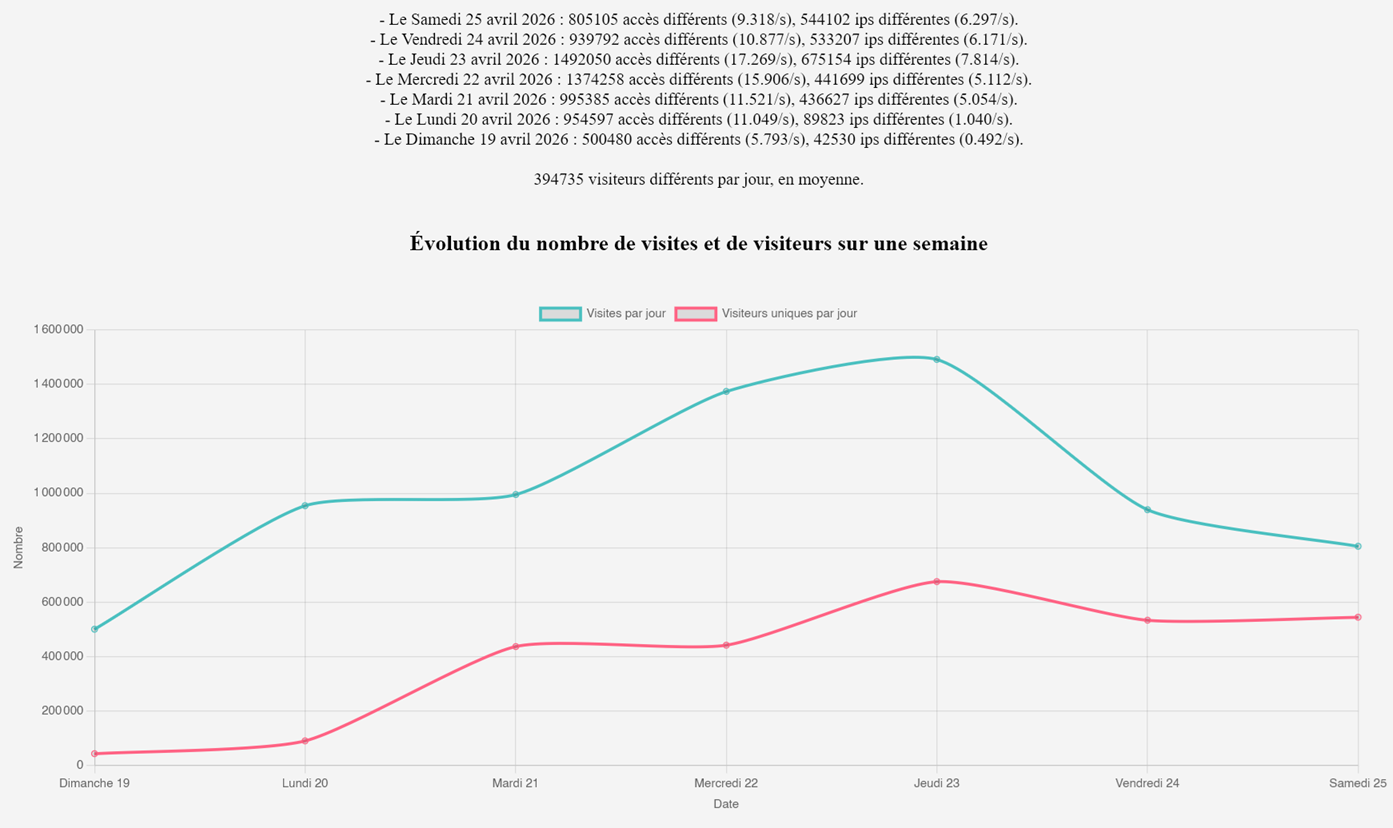
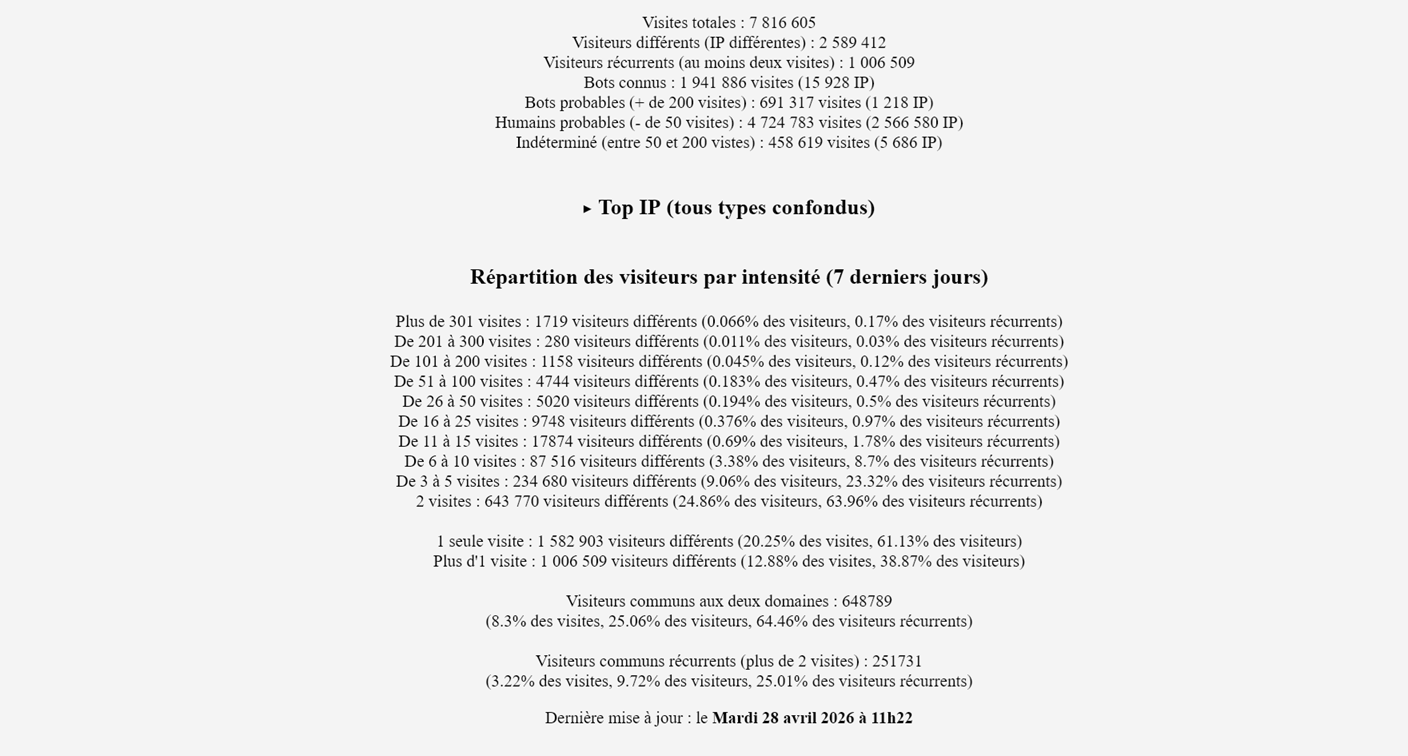



 (en bas à gauche).
