Psydrax latifolia
Pas d'illustration
pour le moment 😕


Un grand arbuste. Il atteint 2 à 6 m de haut et 1 à 3,5 m de large. Les feuilles mesurent 5 à 12 cm de long sur 2 à 5 cm de large. Ils sont ovales et ternes. Ils sont rigi ... (traduction automatique)
→suite


Affich., herbiers & co.
Psydrax latifolia

Un grand arbuste. Il atteint 2 à 6 m de haut et 1 à 3,5 m de large. Les feuilles mesurent 5 à 12 cm de long sur 2 à 5 cm de large. Ils sont ovales et ternes. Ils sont rigides et épais et vert jaunâtr... (traduction automatique) →suite
Pas d'illustration
pour le moment 😕
Pas d'illustration
pour le moment 😕
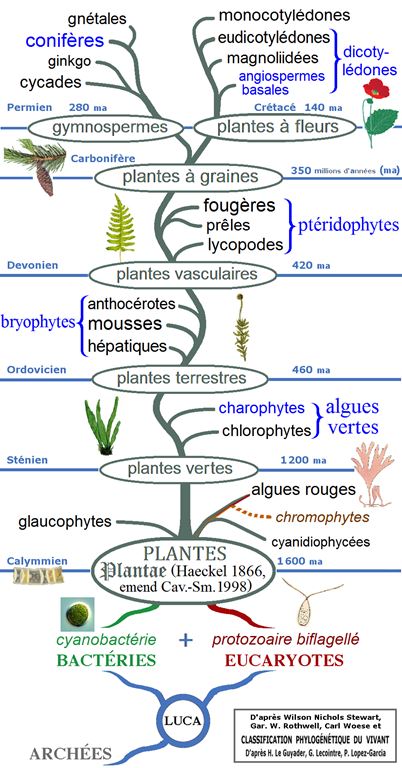
Classification
- Classique : en haut de l'écran, sous le coeur.
- Phylogénétique :
- Clade 4 : Angiospermes ;
- Clade 3 : Dicotylédones_vraies ;
- Clade 2 : Astéridées ;
- Clade 1 : Lamiidées ;
- Ordre APN : Gentianales ;
- Famille APN : Rubiaceae ;
À droite, cet arbre phylogénétique des plantes montre les principaux clades et groupes traditionnels (monophylétiques en noir et paraphylétiques en bleu).
Dénominations
- Nom botanique : Psydrax latifolia F. Muell. ex Benth.) S. T. Reynolds & R. J. F. Hend.
- Synonymes : Canthium latifolium F. Muell. ex Benth
- Noms anglais et locaux : Bugs raisin, Native plum, Broad-leaf native currant
Description et culture
Tableau récapitulatif
Parties comes-tibles Note comest. (1-5) Note medic. (1-5) (Zones de) Rusticité Besoins en 
Besoins en  (1-3)
(1-3)Périodes de semis et récoltes Graines au gramme Durée de viabilité Profon-deur semis Espace-ment plants Espace-ment lignes Durée germi-native Durée avant récolte J F M A M J
J A S O N D
J F M A M J
J A S O N D
- dont infos de 0FPI ("FOOD PLANTS INTERNATIONAL", en anglais) :
Description :
Un grand arbuste. Il atteint 2 à 6 m de haut et 1 à 3,5 m de large. Les feuilles mesurent 5 à 12 cm de long sur 2 à 5 cm de large. Ils sont ovales et ternes. Ils sont rigides et épais et vert jaunâtre pâle. Les fleurs mesurent 0,5 cm de diamètre. Ils sont blancs et en grappes lâches à l'aisselle des feuilles. Le fruit est charnu et a une pierre dure à l'intérieur. Il mesure 1 cm de diamètre. Il est noir à maturité. Le fruit est comestible{{{0(+x) (traduction automatique).
Original : A tall shrub. It grows 2-6 m tall and 1-3.5 m wide. The leaves are 5-12 cm long by 2-5 cm wide. They are oval and dull. They are rigid and thick and pale yellowish-green. The flowers are 0.5 cm across. They are white and in loose clusters in the axils of leaves. The fruit is fleshy and have a hard stone inside. It is 1 cm across. It is black when ripe. The fruit is edible{{{0(+x).
Culture :
Les plantes sont cultivées à partir de graines{{{0(+x) (traduction automatique).
Original : Plants are grown from seed{{{0(+x).
 Consommation (rapports de comestibilité, parties utilisables et usages alimentaires correspondants)
Consommation (rapports de comestibilité, parties utilisables et usages alimentaires correspondants)Parties comestibles :
fruits, feuilles{{{0(+x) (traduction automatique). Original : Fruit, Leaves{{{0(+x).Partie testée :
/ Risques et précautions à prendre
Risques et précautions à prendrenéant, inconnus ou indéterminés.
Autres infos
dont infos de 0FPI ("FOOD PLANTS INTERNATIONAL", en anglais) :
Distribution :
C'est une plante tempérée à subtropicale. Il pousse sur des sols sableux rouges et sur des loams argileux et des affleurements rocheux. C'est souvent le long des cours d'eau. Il pousse dans les régions intérieures d'Australie. Il pousse sur des sols sableux profonds. Il convient aux endroits avec des climats chauds à chauds. Ils ont besoin d'un bon drainage et d'une position ensoleillée{{{0(+x) (traduction automatique).
Original : It is a temperate to subtropical plant. It grows on red sandy soils and on clay loams and rocky outcrops. It is often along watercourses. It grows in inland locations in Australia. It grows on deep sandy soils. It suits places with warm to hot climates. They need good drainage and a sunny position{{{0(+x).
Localisation :
Australie*{{{0(+x) (traduction automatique).
Original : Australia*{{{0(+x).
Notes :
Il existe environ 75 à 100 espèces de Psydrax{{{0(+x) (traduction automatique).
Original : There are about 75-100 Psydrax species{{{0(+x).
Liens, sources et/ou références
Liens :
/ ;Sources et/ou références :
bibliographie (liste des sources et/ou références de l'encyclopédie)
dont livres et bases de données : 0FPI ("FOOD PLANTS INTERNATIONAL", en anglais) ;
dont bibliographie/références de 0FPI ("FOOD PLANTS INTERNATIONAL", en anglais) :
Bindon, P., 1996, Useful Bush Plants. Western Australian Museum. p 68 (As Canthium latifolium) ; Bodkin, F., 1991, Encyclopedia Botanica. Cornstalk publishing, p 211 (As Canthium latifolium) ; Cherikoff V. & Isaacs, J., The Bush Food Handbook. How to gather, grow, process and cook Australian Wild Foods. Ti Tree Press, Australia p 189 (As Canthium latifolium) ; Cribb, A.B. & J.W., 1976, Wild Food in Australia, Fontana. p 74 (As Canthium latifolium) ; Elliot, W.R., & Jones, D.L., 1982, Encyclopedia of Australian Plants suitable for cultivation. Vol 2. Lothian. p 457 (As Canthium latifolium) ; Green, J., (Ed.), 2003, Anmatyerr Plant Stories. AID Press. p 2 (As Canthium latifolium) ; Hall, N. et al, 1972, The Use of Trees and Shrubs in the Dry Country of Australia, AGPS, Canberra. p 356 (As Canthium latifolium) ; Hiddins, L., 1999, Explore Wild Australia with the Bush Tucker Man. Penguin Books/ABC Books. p 132 ; Hunter, J.T., 2017, Is there a relationship between contemporary high Aboriginal plant resource locations and mapped vegetation communities? Cunninghamia 17:27-34. The Royal Botanic Garden Sydney. ISSN 2200 - 405X ; Lang, P. J., et al, 1986, Anangu Pitjantjatjara Lands Biological Survey. p 43 (As Canthium latifolium) ; Lazarides, M. & Hince, B., 1993, Handbook of Economic Plants of Australia, CSIRO. p 46 (As Canthium latifolium) ; Paczkowska, G . & Chapman, A.R., 2000, The Western Australian Flora. A Descriptive Calatogue. Western Australian Herbarium. p 515 ; Schatz, G.E., 2001, Generic Tree Flora of Madagascar. Royal Botanical Gardens, Kew and Missouri Botanical Garden. p 338 (Genus) ; Smith, N. M., 1991, Ethnobotanical Field Notes from the Northern Territory, Australia, J. Adelaide Bot. Gard. 14(1): 1-65 (As Canthium latifolium) ; Urban, A., 1990, Wildflowers of Inland Australia. Portside editions. p 157 (As Canthium latifolium) ; www.theplantlist.org
Recherche de/pour :
- "Psydrax latifolia" sur Google (pages et
images) ;
IPNI ("International Plant Names Index", en anglais) ;
TPL ("The Plant List", en anglais) ;
GRIN ("Germplasm Resources Information Network", en anglais) ;
TROPICOS (en anglais) ;
Tela Botanica ;
Pl@ntNet ;
Pl@ntUse ;
"Plants For A Future" (en anglais) ;
"Useful Tropical Plants" (en anglais) ou
"Useful Temperate Plants" (en anglais) ;
- "Psydrax latifolia" sur Google (pages et
images) ;
IPNI ("International Plant Names Index", en anglais) ;
TPL ("The Plant List", en anglais) ;
GRIN ("Germplasm Resources Information Network", en anglais) ;
TROPICOS (en anglais) ;
Tela Botanica ;
Pl@ntNet ;
Pl@ntUse ;
"Plants For A Future" (en anglais) ;
"Useful Tropical Plants" (en anglais) ou
"Useful Temperate Plants" (en anglais) ;
Espèces du même genre (Psydrax)
11 taxons
Espèces de la même famille (Rubiaceae)
662 taxons
- Amyruca
- Aspérule azurée
- Blackberry jam fruits
- Borojo
- Caféier
- Caféier catura
- Caféier de Charrier
- Caféier de Zanzibar
- Caféier du bengladesh
- Caféier du libéria
- Caféier du Mozambique
- Caféier fadenii
- Caféier kona
- Caféier marron
- Caféier mongensis
- Caféier robusta
- Caféier stenophylla
- Caille-lait blanc
- Chacruna
- Croisette de printemps glabre
- Cynocrambe
- Gaillet à trois fleurs
- Gaillet aristé
- Gaillet boréal
- Gaillet croisette
- Gaillet gratteron
- Gaillet jaune
- Gaillet odorant
- Garance de Requien
- Garance des teinturiers
- Gardenia femelle
- Genipap
- Goyave noire
- Hamelia
- Huannco
- Jasmin du Cap
- Keetie de Zanzibar
- Liane du Pérou
- Manhar
- Mutugundo
- Néflier d'Afrique
- Noni
- Oldenlandie en corymbe
- Pêche africaine
- Pentagonia
- Plante à fromage
- Polysphérie à petites feuilles
- Polysphérie multiflore
- Pyrostre à deux bractées
- Pædérie fétide
- Afrocanthium burtii
- Afrocanthium gilfillanii
- Afrocanthium lactescens
- Afrocanthium mundianum
- Afrocanthium shabanii
- Agouticarpa curviflora
- Aidia cochinchinensis Lour.
- Aidia genipiflora
- Aidia micrantha
- Aidia racemosa
- Alibertia claviflora K.Schum.
- Alibertia curviflora K.Schum.
- Alibertia edulis (Rich.) A.Rich. ex DC. (Goyave noire)
- Alibertia latifolia
- Alibertia melloana Hook.f.
- Alibertia patinoi
- Alibertia pilosa K.Krause
- Alibertia sorbilis Huber ex Ducke
- Alibertia stipularis
- Alibertia verticillata
- Amaioua corymbosa Kunth
- Amaioua guianensis Aubl.
- Ancylanthos bainesii Hiern
- Ancylanthos rubiginosus Desf.
- Anthospermum herbaceum L.f.
- Antirhea tenuiflora F.Muell. ex Benth.
- Arachnothryx reflexa
- Arcytophyllum thymifolium
- Asperula orientalis Boiss. & Hohen. (Aspérule azurée)
- Asperula suberosa Sibth. & Sm.
- Atractocarpus chartaceus
- Atractocarpus fitzalanii
- Atractocarpus hirtus
- Atractocarpus sessilis
- Benkara fasciculata
- Benkara malabarica
- Bertiera racemosa
- Borojoa claviflora
- Borojoa Patinoi Cuatrec. (Borojo)
- Borojoa sorbilis
- Borojoa venezuelensis Steyerm.
- Borreria articularis
- Breonia chinensis
- Breonia madagascariensis A.Rich. ex DC.
- Bullockia pseudosetiflora
- Bullockia setiflora
- Burchellia bubalina
- Burttdavya nyasica Hoyle
- Canthium ciliatum
- Canthium coromandelicum
- ...







 donne accès au menu
  - encyclopédies des plantes alimentaires ;
 - page de recherche - reconnaissance (identification) de plantes ;
 - page du calendrier lunaire et son générateur (au format PDF et JPG) ;
 - tableau récapitulatif ;
 - générateur de potées (soupes), avec estimation des apports nutrionnels et du coût;
 - générateur de codes QR ;
 - page des archives avec de nombreux documents sur différents thèmes complémentaires comme la botanique, les légumes,
les champignons, la cuisine, le bien-être ainsi que différents MOOC mais également des liens vers les archives de l'association ;
- page des archives avec de nombreux documents sur différents thèmes complémentaires comme la botanique, les légumes,
les champignons, la cuisine, le bien-être ainsi que différents MOOC mais également des liens vers les archives de l'association ;

 ou
ou
 permettant de passer du format standard à l'AMP (et vice-versa), lequel est simplifié et donc plus rapide.
 pour le fruit (et/ou les graines, la pulpe, etc...),
 pour les fleurs (et/ou pétales, calice...),
 pour les feuilles (et/ou la tige, les pousses...),
 pour les racines,
 pour le tronc (et/ou l'écorce, la sève...), et enfin
 pour les champignons,
puis les notes alimentaires et médicinales (de 1 à 5 étoiles), la rusticité (résistance au froid/gel)
et pour finir un résumé.
pour les champignons,
puis les notes alimentaires et médicinales (de 1 à 5 étoiles), la rusticité (résistance au froid/gel)
et pour finir un résumé. menant ici 🙂
 ,
,  et
et





 ,
,


 Encyclopédie(s)
 Recherche-Reconnaissance
 Tableau récapitulatif
 Codes QR
 Archives
 Calendrier(s) lunaire(s)
  Potées
 Re-naturation/naturalisation
 Affichettes, herbiers &
co.
Affichettes, herbiers &
co. menu
menu galerie







